This 15 minute video starts with an overview of Photobiomodulation and low level light therapy. Later in the presentation James introduces the Lumithera treatment for Dry Age related Macular Degeneration (AMD).
Categories
Essays
Links
This 15 minute video starts with an overview of Photobiomodulation and low level light therapy. Later in the presentation James introduces the Lumithera treatment for Dry Age related Macular Degeneration (AMD).
The VA, Boston University and Harvard Medical School published the results of a Transcranial LLLT (LED) pilot study on mild Traumatic Brain Injury (TBI). Incredibly; TBI is a leading cause of death and disability among children and young adults in the United States. Each year an estimated 1.5 million Americans sustain a TBI, 50,000 people die as a consequence, 230,000 are hospitalized and an estimated 5.3 million currently live with a permanent TBI-related disability (because there is no cure). This study showed significant improvement in Executive Function, Verbal Learning, Long Delay Free Recall and fewer post-traumatic stress disorder (PTSD) symptoms. Participants and family reported better ability to perform social, interpersonal, and occupational functions. This was a small pilot study on just eleven patients with chronic mTBI, there was no placebo control group so further studies are necessary to truly establish the effect size.
 The paper “High-intensity versus low-level laser therapy in the treatment of patients with knee osteoarthritis: a randomized controlled trial” Kheshie et al 2014 pitches the 3B BTL laser against the HIRO class IV “High intensity” laser. The results appear to show that the HIRO class IV “High intensity laser” was more effective than the “Low Level Laser”. HOWEVER, the HIRO class IV “High intensity” laser was delivered over a large area (not adequately defined but approx 100cm2 by my estimation) so the intensity was actually very low (about 13mW/cm2 which is less than most LED systems), and the 3B BTL “Low Level Laser” was actually very high (4 x 200mW small, high intensity beams) and were held stationary on the patella for over half an hour, YES, HALF AN HOUR IN ONE SPOT! This is insane.
This paper leads people to think that the class IV Hiro laser was more effective because it was higher intensity when in fact the beam distribution meant the average intensity distribution was low (13mW/cm2). The 3B laser was not so effective because it was held stationary such that it would cause an overdose. If the 3B laser treatment had been delivered in using same scanning technique as the class IV then they would likely have achieved the same result. (I am not a fan of scanning because you can never be sure how much energy you have delivered to an area, better to use a low intensity device and hold it still in my view).
This paper misdirects the reader towards favouring class IV lasers rather than 3b or LED by misinforming the reader.
A joint meeting of the North American Association for Laser Therapy (NAALT) and the World Association for Laser Therapy (WALT) in Washington DC, USA in 9-12 September 2014. click here. Call for abstracts is still open.
The Optical Society of America hosts “LLLT – the path forward” : LLLT/PBM, is will soon be 50 years old. Hundreds of positive clinical trials and thousands of laboratory studies have been published yet it has not been adopted by mainstream medicine. This meeting will address the reasons for this failure and identify paths forward. Washington DC 20-22 August 2014. This is a small invited guests only meeting, if you would like an invitation then submit your credentials here for consideration.
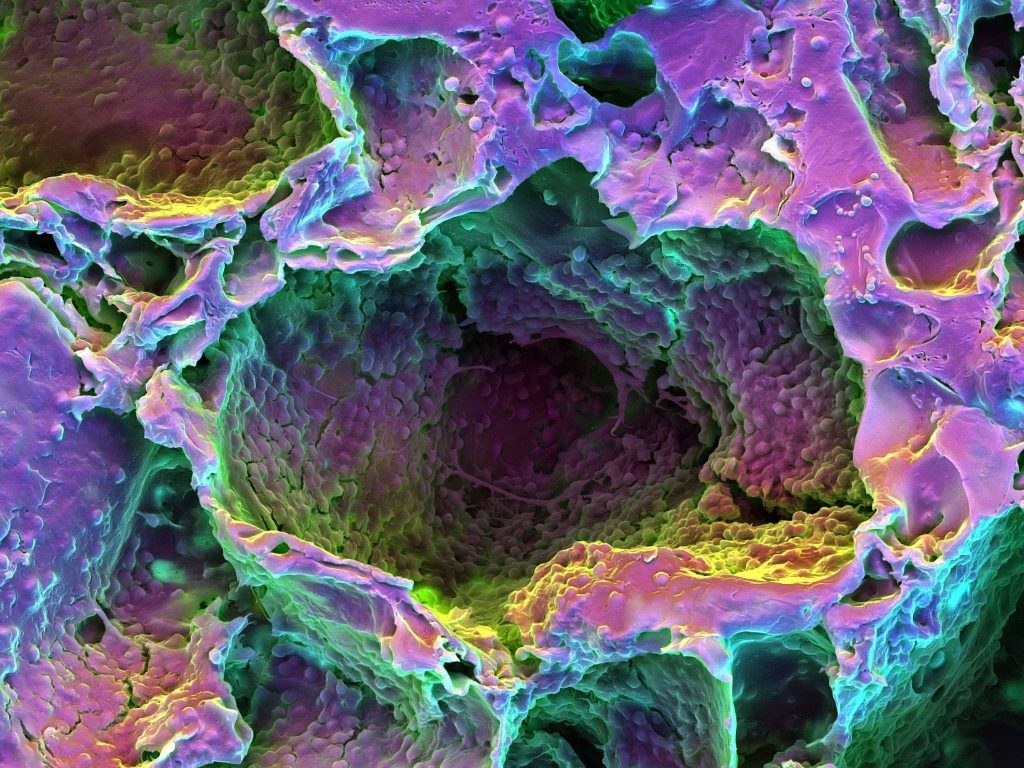 TV, radio and newspapers all over the world got very excited last week reporting that “laser regenerates teeth” following a Harvard study. The study showed that LLLT stimulates the stem cells resident in the tooth pulp to form dentin (for details click below). This is the highest profile announcement for any LLLT paper ever and will add significant awareness and credibility for everyone in the field. Congratulations and huge thanks to the author Dr Praveen Arany B.D.S., M.D.S., M.M.Sc., Ph.D. who is now a Clinical Investigator at NIH.
More than half of americans live with chronic pain and is one of the reasons for missed work, and fuelled a billion dollar prescription drug industry. But Photobiomodulation Therapy’s noninvasive, high tech treatment now gets folk back to work faster.
More about Photobiomodulation Therapy.
28 papers for December 2013 starting with a good narrative editorial from Richard Godine DVM who make good points about dose, penetration and treatment guidelines for pets. There is an LLLT study on TMJ pain, a couple of orthodontic tooth movement papers, a clinical trial on subacromial impingement syndrome, Jan Tuner wrote a nice op ed regarding a failed tinnitus trial pointing out the obvious dosimetry flaws. There is a trial on muscle fatigue in young women, a lichen planus study, gingival hyperplasia and much more (of course).
Godine, RL
Ruckersville Animal Hospital and Veterinary Laser Therapy Center , Ruckersville, Virginia.
Continue reading