Categories
Essays
Links
Category Archives: Rants
James Carroll: PBM dose. Why I do not believe any of you
Mr. James Carroll, founder and CEO of THOR Photomedicine and a Fellow of the Royal Society of Medicine presented at the MGH Brain PBM Clinic Rounds (05.03.24) on the urgent need to report uniform parameters in tPBM research in order to advance the field further.
Posted in Industry, Information Videos, James in Action, Rants, THE FUTURE OF PBM/LLLT, Video of the Week
on James Carroll: PBM dose. Why I do not believe any of you
BMJ snubs LLLT for neck pain again, but gives drugs with no evidence a pass
As reported here in 2013 there are no licensed drugs for non-specific neck pain because “there isn’t much specific research that shows drugs help neck pain”. For LLLT/PBM however, there are at least 16 (mostly positive) RCTs and a positive systematic review published in The Lancet. Despite this unequivocal evidence, the 2014 revised patient advice leaflet from the BMJ fails to mention LLLT/PBM but states “your doctor may recommend one or more of the following” and goes on to list pain killers, NSAIDs, antidepressants and muscle relaxants”.
Last year I pursued someone at the BMJ, supplied them with the necessary data including controversial papers and rebuttals (5 months ahead of online publication on their own website). I obtained confirmation it was received and passed to “the Best Practice team who have logged it for the next review”, but as you can see, my efforts were unrewarded and LLLT/PBM did not get a mention. Unfortunately my contact there has left the journal so I have to find a new way in to gain an explanation.
The BMJ prides itself on impartiality and evidence based advice, so it is a mystery to me how this can happen. Watch this space for another 8 months!
Posted in Rants
on BMJ snubs LLLT for neck pain again, but gives drugs with no evidence a pass
More Class IV laser therapy misinformation
 The paper “High-intensity versus low-level laser therapy in the treatment of patients with knee osteoarthritis: a randomized controlled trial” Kheshie et al 2014 pitches the 3B BTL laser against the HIRO class IV “High intensity” laser. The results appear to show that the HIRO class IV “High intensity laser” was more effective than the “Low Level Laser”. HOWEVER, the HIRO class IV “High intensity” laser was delivered over a large area (not adequately defined but approx 100cm2 by my estimation) so the intensity was actually very low (about 13mW/cm2 which is less than most LED systems), and the 3B BTL “Low Level Laser” was actually very high (4 x 200mW small, high intensity beams) and were held stationary on the patella for over half an hour, YES, HALF AN HOUR IN ONE SPOT! This is insane.
This paper leads people to think that the class IV Hiro laser was more effective because it was higher intensity when in fact the beam distribution meant the average intensity distribution was low (13mW/cm2). The 3B laser was not so effective because it was held stationary such that it would cause an overdose. If the 3B laser treatment had been delivered in using same scanning technique as the class IV then they would likely have achieved the same result. (I am not a fan of scanning because you can never be sure how much energy you have delivered to an area, better to use a low intensity device and hold it still in my view).
This paper misdirects the reader towards favouring class IV lasers rather than 3b or LED by misinforming the reader.
Posted in Rants
on More Class IV laser therapy misinformation
LLLT nomenclature: Cold Low Energy level Laser Soft Therapy Photobiomodulation Phototherapy – Whats in a name ?
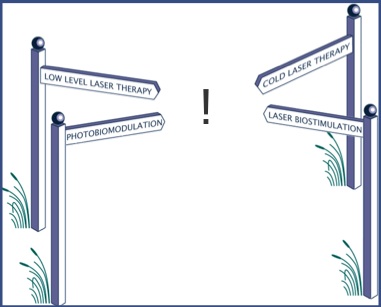 At the NZ2008 laser meeting we debated LLLT nomenclature, many scientists prefer to call it Photobiomodulation (and I agree this is the best name). Laser Biostimulation was used for some time by the American Society for Lasers in Surgery and Medicine, who recently adopted Photobiomodulation instead. Pubmed have chosen LLLT (stands for Low Level Laser Therapy) as the MeSH term (MeSH stands for Medical Subject Heading) however they have used that label for almost every form of medical laser treatment (low level or otherwise). Low Level Laser Therapy was a term coined by Oshiro and Calderhead back on the 1980’s.
Here are some words and phrases I have collected over the years:
Bioregulating Laser
Biostimulating Laser
Broad Band Radiation Therapy
Class IV laser Therapy
Cold Laser Therapy
Diode Laser Therapy
He-Ne Laser therapy
Helium-neon laser irradiation
HILT (High Intensity Laser Therapy)
Infrared laser light
Laser Acupuncture
Laser Biostimulation
Laser Irradiation
Laser Phototherapy
Laser Therapy
LED phototherapy
LED therapy
LELT (Low Energy Laser Therapy)
LEPT (Low Energy Photon Therapy)
Light Therapy
light-emitting diode phototherapy
LILT (Low Intensity Laser Therapy)
LLLT (Low level Laser Therapy)
low fluence diode laser irradiation
low level light treatment
Low Light Laser Therapy
Low Power Laser Irradiation
Low Power Laser Therapy
Low Reactive Level Laser Therapy
lower-level laser therapy
Mid Laser Therapy
Moderate intensity light ( MIL)
Monochromatic Infra Red Energy
Monochromatic Infrared Photo Energy
Monochromatic Light Therapy
Monochromatic phototherapy
near-infrared light therapy
NIR laser therapy
nonablative laser therapy
PBM (Photobiomodulation)
Photo Irradiation
Photobioactivation
Photobiomodulation
Photobiostimulation
Photomedicine
Photon Therapy
Photoradiation
Photostimulation
Phototherapy
Physiotherapy Laser
Polarised Polychromatic Light
Polarised Radiation
Red light phototherapy
Soft Laser Therapy
Therapeutic Laser
Medium-level laser therapy
It is also common for laser wavelength and / or lasing medium to be added to the title . common examples are 810nm laser diode therapy for xyz. In case you are not familiar with the common wavelengths and materials used they are: 660nm 810nm 830nm 904nm
Full list as follows: 590nm 632.8 650nm 635nm 660nm 670nm 680nm 750nm 780nm 705nm 908nm 810nm 820nm 830nm 850nm 870nm 880nm 890nm 904nm 905nm 950nm 940nm 970nm 980nm 1064nm
Materials: GaAlAs, Gallium Aluminium Arsenide, GaAs, Gallium Arsenide, HeNe, Helium Neon, AlGaInP, Aluminium Gallium Indium Phosphide,
Some class IV surgical lasers are being detuned down to LLLT intensities (defused beam) so you will find other materials and wavelengths appearing CO2 and NdYag 940nm 970nm 980nm 1064nm
Posted in Rants
on LLLT nomenclature: Cold Low Energy level Laser Soft Therapy Photobiomodulation Phototherapy – Whats in a name ?
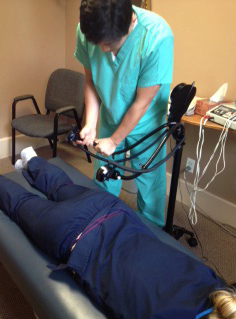
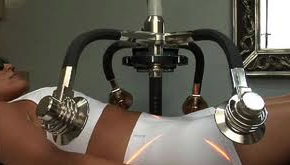
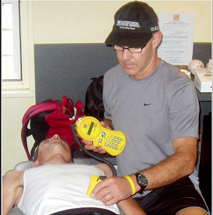
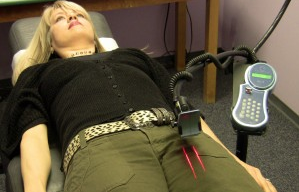
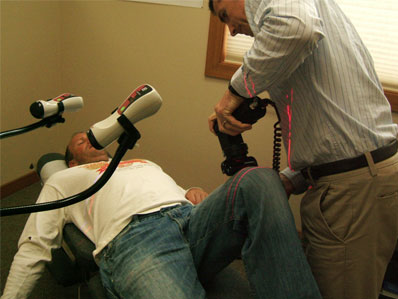
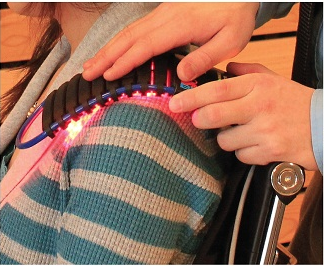
LLLT Low level cold class IV laser therapy. Treat the skin directly, preferably in contact (or very close).
oh dear, I hope that none of this audience (you) are attempting to treat through clothing. Light does not go through clothing very well (if at all). You must treat the skin directly, preferably in contact (or very close).
These examples will not work
Posted in Rants
on LLLT Low level cold class IV laser therapy. Treat the skin directly, preferably in contact (or very close).
Kadhim-Saleh laser neck pain review conclusion incorrect. LLLT is clinically effective
Last October a systematic review on LLLT for neck pain was written by Kadhim-Saleh et al and published in the British Journal of Sports Medicine. They report that the evidence for LLLT in neck pain is inconclusive. The paper criticises the 2009 Lancet review by Roberta Chow & Bjordal et al on LLLT for non-specific neck pain claiming their review was more stringent. Well you have to read the rebuttal Bjordal shot back to the journal editor revealing the weakness, errors and fundamental flaws in the work of Kadhim-Saleh et al
Posted in Rants
8 Comments
LLLT Systematic reviews with meta-analysis are hard to do
LLLT Systematic reviews with meta-analysis are hard to do for all sorts of reasons:
1) LLLT has had a lot of different names (cold laser, laser biostimulation, Photobiomodulation, low intensity laser laser therapy, LEDT, etc) so the literature search is hard (see my post on this from 2008, recently updated)
2) The authors need to have an advanced knowledge of the pathology in question.
3) The authors need to have an advanced knowledge of LLLT too, particularly the matter of irradiation parameters and dose*
4) Then the meta-analysis requires a high degree of competence with medical statistics
* So we should not be surprised when someone who looks at a broad range of interventions for a pathology with limited knowledge of LLLT struggles (and often fails) to stratify the data by effective irradiation parameters (wavelength, power, beam area, irradiance, pulses), dose (time, energy, fluence), treatment location, number of treatments and interval between treatments.
It may be that LLLT is not a suitable intervention for the pathology in question but if LLLT appears to be effective sometimes and not others then you have to stratify the data in the way that others have done to discover that there may dose, dose rate (irradiance/power density) or other irradiation dependent effects.
The WALT guidelines go some way towards helping the reviewers in this regard though there are gaps due to lack of data, and even then there are mistakes in the original papers which makes writing those guidelines hard too.
I will get around to preparing a blog post on my extended version of the WALT guidelines which attempt to fill in the gaps based on extrapolation and first principles.
Posted in Rants
on LLLT Systematic reviews with meta-analysis are hard to do