Categories
Essays
Links
Category Archives: Training
Talking Evidence with THOR Photomedicine
THOR Photomedicine work with leading universities and hospitals around the world, providing up to date research data and cutting edge knowledge on training courses. This 2 minute video gives you a small taste/overview of what you can expect attending our one day Photobiomodulation workshop course.
Register today for our comprehensive training and equip yourself with the tools to relieve pain.
Posted in Industry, Information Videos, James in Action, PBM/LLLT, Research, THE FUTURE OF PBM/LLLT, Training, Video of the Week
on Talking Evidence with THOR Photomedicine
Training with THOR Photomedicine
THOR Photomedicine provide the best Photobiomodulation (PBM) / low level laser therapy (LLLT) training in the world. This 2 minute video gives you a small taste/overview of what you can expect attending our one day Photobiomodulation workshop course.
View current photobiomodulation therapy training dates in your location.
Posted in Industry, Information Videos, James in Action, PBM/LLLT, Research, THE FUTURE OF PBM/LLLT, Training, Video of the Week
on Training with THOR Photomedicine
Shepherd University has introduced Photobiomodulation to their advanced practice nurses and faculty members
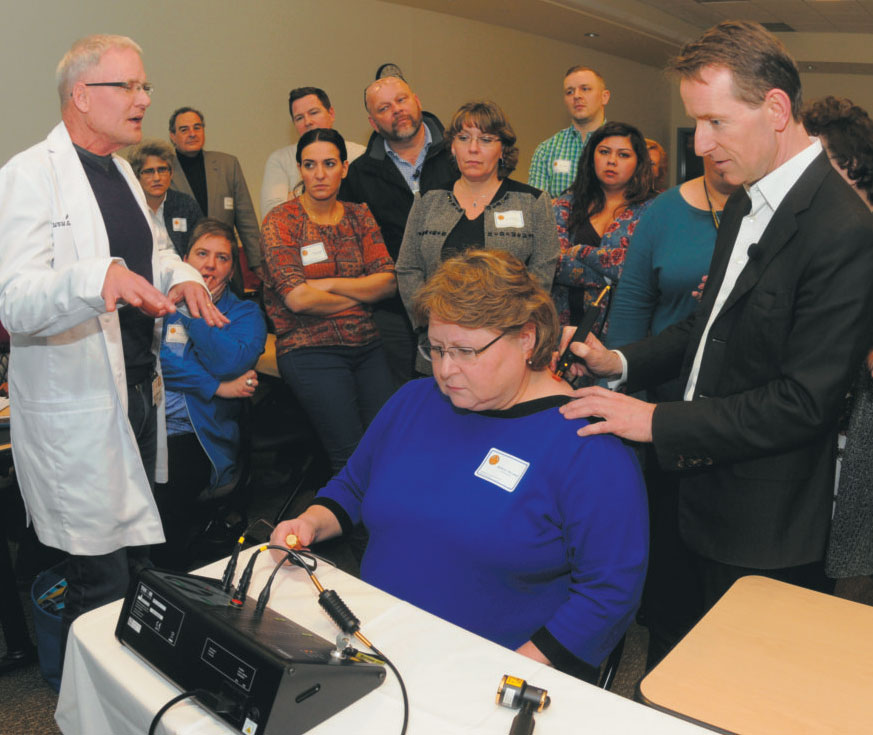
Shepherd University in partnership with the Photobiomodulation Therapy Foundation, announced its new health education initiative Wednesday during a day-long workshop, which introduced PBM, or photobiomodulation, to Shepherd’s advanced practice nurses and faculty members. It is considered the first step in bringing the application of light-based treatments into the nursing curriculum.
“PBM is important to West Virginians,” said Dr. Sharon Mailey, acting dean for and chair of the Department of Nursing Education, in a press release. “Our state leads the nation in opioid overdose deaths. PBM’s effectiveness in treating pain can create a viable alternative treatment that will help reduce dependence on addictive and dangerous medications.”
Read the full article on shepherd.edu
THOR in the news at Shepherd University

Shepherd University announces new strategic health education initiative.
Shepherd University and the PBM Foundation will tackle healing in a different way, by bringing the science and application of light-based treatments into their curriculum.
Read the full article and watch the video on localdvm.com
Posted in Industry, Interviews, Training
on THOR in the news at Shepherd University
Draft: Suggestions for consent before LLLT
Here are some suggestions to help you develop your patient informed consent form
INTRODUCTION
Photobiomodulation is low intensity laser treatment that has been shown to reduce inflammation, improve healing and reduce pain from back and neck pain, from sports injuries, after surgery and after radiotherapy treatments.
This low intensity laser light is applied to injuries for one minute per treatment site. Multiple sites may need treatment so treatment time can take several minutes.
You will hear a beep when the machine is switched on and occasionally some people feel a warm or tingling sensation
SAFETY
The laser machine is approved use by the United States, Heath Canada, UK, European Union and Australia.
We do not treat over tumours, or the eyes or or directly over the womb of a pregnant mother.
You will be asked to wear specially safety glasses. This is an extra precaution to keep your eyes safe and make sure you cannot see if you are getting the active or sham laser therapy. You must wear them for the entire time the laser therapy machine is switched on. The person giving you the treatment will be also wearing safety glasses.
SIDE EFFECTS
There are no reported significant side effects. Occasionally pain might feel slightly worse for a few hours after treatment.
- Do you understand that this is a laser and light therapy treatment intended to stimulate healing and relieve pain?
- The treatment should not be painful and you should feel no significant heat, but you might feel a pleasant warmth.
- Are you pregnant?
- Are you epileptic?
- Do you have any known carcinoma?
- Are you photosensitive or taking any photosensitising drugs ?
- Warn patients they may have temporary aggravated symptoms after LLLT
What else ?
Please add your comments and suggestions below
Posted in Training
2 Comments
My Top Five LLLT wound healing papers
First an introduction to Low Level Light Therapy (LLLT) for wound healing.
Low Level Light Therapy (LLLT) improves tissue repair, reduces pain and inflammation wherever the beam is applied. Treatments take a few minutes and should be applied two or more times a week.
LLLT has been used for many years on sports injuries, arthritic joints, back and neck pain, and non-healing wounds such as venous ulcers diabetic foot ulcers and pressure sores as well as post chemotherapy and radiation ulcers (mucositis).
How LLLT works:
Mitochondria in stressed or ischemic tissues synthesise nitric oxide (NOmt) that binds to cytochrome c oxidase competitively displacing oxygen leading to oxidative stress and reduced ATP production.
Light of the correct wavelength when applied to wounds is absorbed by cytochrome c oxidase displacing NOmt thereby reducing oxidative stress and increasing ATP production.
A cascade of downstream metabolic effects have been shown to include increased Ca2+, secretion of growth factors, activation of enzymes & other secondary messengers.
Subsequent increases in cellular activity and mitosis has been shown in vitro and in vivo including neutrophils, macrophages, fibroblasts, mast cells, endothelial cells and keratinocytes.
Several small clinical trials have shown a significant reduction in healing time and pain in hard to heal wounds.
The use of low energy photon therapy (LEPT) in venous leg ulcers: a double-blind, placebo-controlled study.
Gupta AK, Filonenko N, Salansky N, Sauder DN
Department of Medicine, University of Toronto, Ontario, Canada
BACKGROUND: Venous ulcers are estimated to be present in 0.2 to 0.4% of the population. Although new therapies have significant promise, nonhealing ulcers still represent a significant problem. OBJECTIVE: To evaluate the efficacy of low energy photon therapy (LEPT) in the treatment of venous leg ulcers. METHODS: A placebo-controlled, double-blind study using low energy photon therapy was performed in nine patients with 12 venous ulcers. Treatment was given three times a week for 10 weeks, using two monochromatic optical sources. One source provided a wavelength (lambda) of 660 nm (red) while the second source delivered a wavelength of 880 nm (infrared). Two optical probes were used, one consisted of an array of 22 monochromatic sources, operating at a wavelength of 660 nm and covering an area 6 x 10 cm2. The second probe had seven infrared sources, operating at a wavelength of 880 nm and covering an area of 4 cm2. The above configuration of optical probes was selected to cover the majority of the ulcer area being treated. The patients who were randomized to placebo treatment received sham therapy from an identical-appearing light source from the same delivery system. RESULTS: Nine patients with 12 venous ulcers were randomized to receive LEPT or placebo therapy. At the conclusion of the study, the percentage of the initial ulcer area remaining unhealed in the LEPT and placebo groups was 24.4% and 84.7%, respectively (P = 0.0008). The decrease in ulcer area (compared to baseline) observed in the LEPT and placebo groups was 193.0 mm2 and 14.7 mm2, respectively (P = 0.0002). One patient dropped out of the study, complaining of lack of treatment efficacy; he was found to be randomized to the placebo group. There were no adverse effects. CONCLUSION: In this placebo-controlled, double-blind study LEPT was an effective modality for the treatment of venous leg ulcers.
Dermatol Surg. 1998 Dec 24(12) 1383-6
http://www.ncbi.nlm.NIH.gov/entrez/query.fcgi?cmd=Retrieve&db=PubMed&dopt=Citation&list_uids=9865208
Phototherapy Improves Healing of Chronic Venous Ulcers.
Caetano KS, Frade MA, Minatel DG, Santana LA, Enwemeka CS Department of Bioengineering, Faculty of Medicine, University of Sao Paulo, Ribeirao Preto, Brazil.
Abstract
Objective: We tested the hypothesis that LED phototherapy with combined 660-nm and 890-nm light will promote healing of venous ulcers that failed to respond to other forms of treatment. Background Data: A variety of dressings, growth factors, and adjunct therapies are used to treat venous ulcers, but none seems to yield satisfactory results. Materials and Methods: We used a randomized placebo-controlled double-blind study to compare a total of 20 patients divided with 32 chronic ulcers into three groups. In group 1 the ulcers were cleaned, dressed with 1% silver sulfadiazine (SDZ) cream, and treated with placebo phototherapy (< .03 J/cm(-3)) using a Dynatron Solaris 705((R)) phototherapy research device. In group 2 the ulcers were treated similarly but received real phototherapy (3 J/cm(-2)) instead of placebo. In group 3 (controls), the ulcers were simply cleaned and dressed with SDZ without phototherapy. The ulcers were evaluated with digital photography and computer image analysis over 90 d or until full healing was attained. Results: Ulcers treated with phototherapy healed significantly faster than controls when compared at day 30 (p < 0.01), day 60 (p < 0.05), and day 90 (p < 0.001), and similarly healed faster than the placebo-treated ulcers at days 30 and 90 (p < 0.01), but not at day 60. The beneficial effect of phototherapy was more pronounced when the confounding effect of small-sized ulcers was removed from the analysis. Medium- and large-sized ulcers healed significantly faster with treatment (>/=40% rate of healing per month) than placebo or control ulcers (p < 0.05). Conclusion: Phototherapy promotes healing of chronic venous ulcers, particularly large recalcitrant ulcers that do not respond to conventional treatment.
Photomed Laser Surg 2009 Jan 16
Phototherapy promotes healing of chronic diabetic leg ulcers that failed to respond to other therapies.
Minatel DG, Frade MA, Franca SC, Enwemeka CS Department of Biotechnology, University of Ribeirao Preto, Ribeirao Preto, Brazil.
OBJECTIVE: We tested the hypothesis that combined 660 and 890 nm LED phototherapy will promote healing of diabetic ulcers that failed to respond to other forms of treatment. RESEARCH DESIGN AND METHODS: A double-blind randomized placebo controlled design was used to study 23 diabetic leg ulcers in two groups of 14 patients. Group one ulcers were cleaned, dressed with 1% silver sulfadiazine cream and treated with “placebo” phototherapy (<1.0 J cm(-2)) twice per week, using a Dynatron Solaris 705(R) device. Group two ulcers were treated similarly but received 3 J cm(-2) dose. RESULTS: At each of 15, 30, 45, 60, 75, and 90 days of healing, mean ulcer granulation and healing rates were significantly higher for group two than the “placebo” group (P < 0.02). While “placebo” treated ulcers worsened during the initial 30 days, group two ulcers healed rapidly; achieving 56% more granulation and 79.2% faster healing by day 30, and maintaining similarly higher rates of granulation and healing over the “placebo” group all through. By day 90, 58.3% of group two ulcers had healed fully and 75% had achieved 90-100% healing. In contrast, only one “placebo” treated ulcer healed fully by day 90; no other ulcer attained > or =90% healing. CONCLUSION: Combined 660 and 890 nm light promotes rapid granulation and healing of diabetic ulcers that failed to respond to other forms of treatment.
Lasers Surg Med 2009 Aug 41(6) 433-41
Low-Level Laser Therapy Facilitates Superficial Wound Healing in Humans: A Triple-Blind, Sham-Controlled Study.
Hopkins JT, McLoda TA, Seegmiller JG, David Baxter G Brigham Young University, Provo, UT. OBJECTIVE:
Low-level laser therapy (LLLT) has been promoted for its beneficial effects on tissue healing and pain relief. However, according to the results of in vivo studies, the effectiveness of this modality varies. Our purpose was to assess the putative effects of LLLT on healing using an experimental wound model. DESIGN AND SETTING: We used a randomized, triple-blind, placebo-controlled design with 2 within-subjects factors (wound and time) and 1 between-subjects factor (group). Data were collected in the laboratory setting. SUBJECTS: Twenty-two healthy subjects (age = 21 +/- 1 years, height = 175.6 +/- 9.8 cm, mass = 76.2 +/- 14.2 kg). MEASUREMENTS: Two standardized 1.27-cm(2) abrasions were induced on the anterior forearm. After wound cleaning, standardized digital photos were recorded. Each subject then received LLLT (8 J/cm(2); treatment time = 2 minutes, 5 seconds; pulse rate = 700 Hz) to 1 of the 2 randomly chosen wounds from either a laser or a sham 46-diode cluster head. Subjects reported back to the laboratory on days 2 to 10 to be photographed and receive LLLT and on day 20 to be photographed. Data were analyzed for wound contraction (area), color changes (chromatic red), and luminance. RESULTS: A group x wound x time interaction was detected for area measurements. At days 6, 8, and 10, follow-up testing revealed that the laser group had smaller wounds than the sham group for both the treated and the untreated wounds (P < .05). No group x wound x time differences were detected for chromatic red or luminance. CONCLUSIONS: The LLLT resulted in enhanced healing as measured by wound contraction. The untreated wounds in subjects treated with LLLT contracted more than the wounds in the sham group, so LLLT may produce an indirect healing effect on surrounding tissues. These data indicate that LLLT is an effective modality to facilitate wound contraction of partial-thickness wounds.
J Athl Train 2004 Sep 39(3) 223-229
Posted in My top five research papers
2 Comments