Categories
Essays
Links
Category Archives: Special Feature
The story of how LLLT / Photobiomodulation was discovered
This is an extraordinary lecture. It is the story of how LLLT / Photobiomodulation was discovered, and because of the context in which it occurred you might also find it very moving, so get some tissues. It is an hour and 10 minutes long so get comfortable, maybe get some popcorn and a drink too. I will paste the email that Andrew Mester wrote into the comments section below.
Here is the email from Andrew Mester :
I had the privilege to give a keynote presentation at the most recent NAALT (North American Association of PhotobiomoduLation Therapy) meeting in February 5, 2017 in Coronado Island, San Diego. The title of paper was: “Invention of Laser Biostimulation”. My lecture is in Youtube now.
BACKGROUND:
Photo-medicine is an exciting new field in both scientific and clinical research all over the world and most recently in the USA. I learned in this interesting meeting that low intensity laser and LED light may stimulate, heal and regenerate neural tissue. Possible treatments are under investigation regarding traumatic events (stroke, traumatic brain injury and global ischemia), degenerative diseases (dementia, Alzheimer and Parkinson’s disease) and psychiatric disorders (PTSD, depression and anxiety). Most American studies are sponsored by the NIH (Michael Hamblin, PhD, Mass General Hospital) and by the VA (Margaret Naeser, PhD at Boston Jamaica Plain VA Hospital).
My association to this field is that my Father, Endre Mester, MD published first biostimulatory effect of the low power laser in 1967. My father, myself and my brother, Adam Mester, MD have published all the basic both research and clinical studies in the literature. We described the stimulatory effect primarily in wound healing and also the systemic effect of laser irradiation which is used now in all of the above mentioned research protocols.
My father is called in the literature the “Father of Photobiomodulation”.
The NAALT society established an Award named after my father: “Professor Endre Mester Award who made the seminal observation on the therapeutic benefits of low dose laser treatments”. The award recognizes a clinician or researcher who has made significant contributions to our understanding of light-biological tissue interactions and its therapeutic benefits, specifically in the area of Photobiomodulation Therapy. I was asked to present this award to Michael Hamblin, PhD from Massachusetts General Hospital, Harvard Medical School because of his lifetime achievements in Photobiomodulation.
Andrew Mester MD
Posted in Conference, Information Videos, Interviews, Special Feature, Video of the Week
on The story of how LLLT / Photobiomodulation was discovered
Class IV laser dose concern. An update from Prof. Jan Bjordal. World Association for Laser Therapy (WALT)
The title of last months PMLS editorial was Low Level Laser Therapy (LLLT) and World Association for Laser Therapy (WALT) Dosage Recommendations. Written by the Scientific Secretary Prof. Jan Bjordal. He describes how far we have come and the importance of the WALT dosage recommendations. No abstract is available for editorials so I have prepared one for you below. (more…)
Posted in Rants, Special Feature
on Class IV laser dose concern. An update from Prof. Jan Bjordal. World Association for Laser Therapy (WALT)
LLLT for Multiple sclerosis (MS) : Nice work Jeri-Anne, Janis and Chukuka
Original article from http://www.sciencecodex.com/light_as_medicine-121445
Multiple sclerosis (MS) causes progressive paralysis by destroying nerve cells and the spinal cord. It interrupts vision, balance and even thinking.
On a suggestion from a colleague, Jeri-Anne Lyons decided to test how the disease responded to a radical therapy – exposure to a certain wavelength of light called near-infrared (NIR). (more…)
Posted in Special Feature
1 Comment
THOR at Harvard MIT
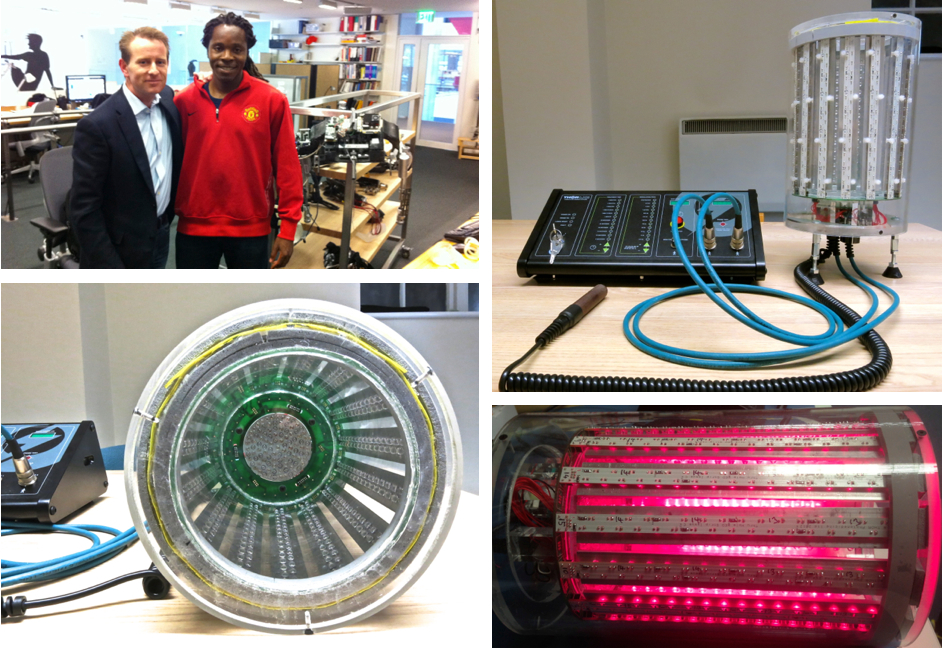
David Sengeh has been developing powered limbs at MIT for amputees (like the bionic man). Where the powered limb attaches to the body (the stump of the original leg) it gets very sore. David has been using our standard THOR products to heal the stump and reduce pain. It works very well, though it takes a lot of time to treat the whole area. I am in Boston now to help David start clinical trials with a new device we designed that will treat the whole stump. The amputee puts the the leg stump into the LED treatment cylinder and gets a complete treatment in just one minute :-)
Posted in Special Feature, THE FUTURE OF PBM/LLLT
5 Comments
How THOR pulses affect dose (they dont)
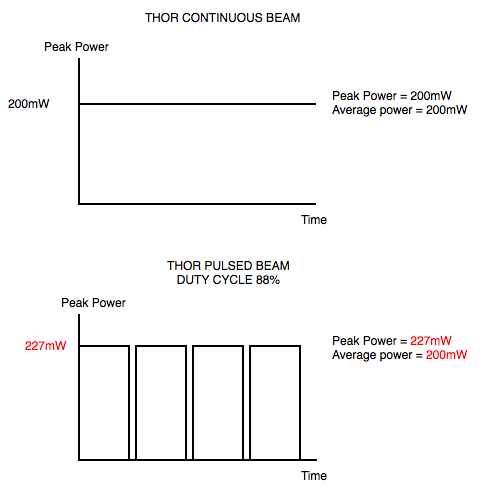
THOR laser and LED treatment probes always give the same average power regardless if pulsed or continuous.
THOR pulses are not a fixed pulse width, the pulses are always 88% on 12% off so no matter what pulse frequency is used the the average power remains the same, even when compared with continuous.
This is because we increase the peak power in pulsed mode to compensate for the period when the beam is off.
At say 2.5Hz the THOR pulse width is calculated 0.88 / 2.5 = 0.352 seconds (352ms)
At say 10Hz the THOR pulse width is calculated 0.88 / 10 = 0.088 seconds (88ms)
At say 100Hz the THOR pulse width is calculated 0.88 / 100 = 0.0088 seconds (8.8ms)
Posted in Special Feature
on How THOR pulses affect dose (they dont)
Cougar treated with THOR Low Level Laser Therapy (LLLT) by exotic animal veterinarian Jenny Conrad
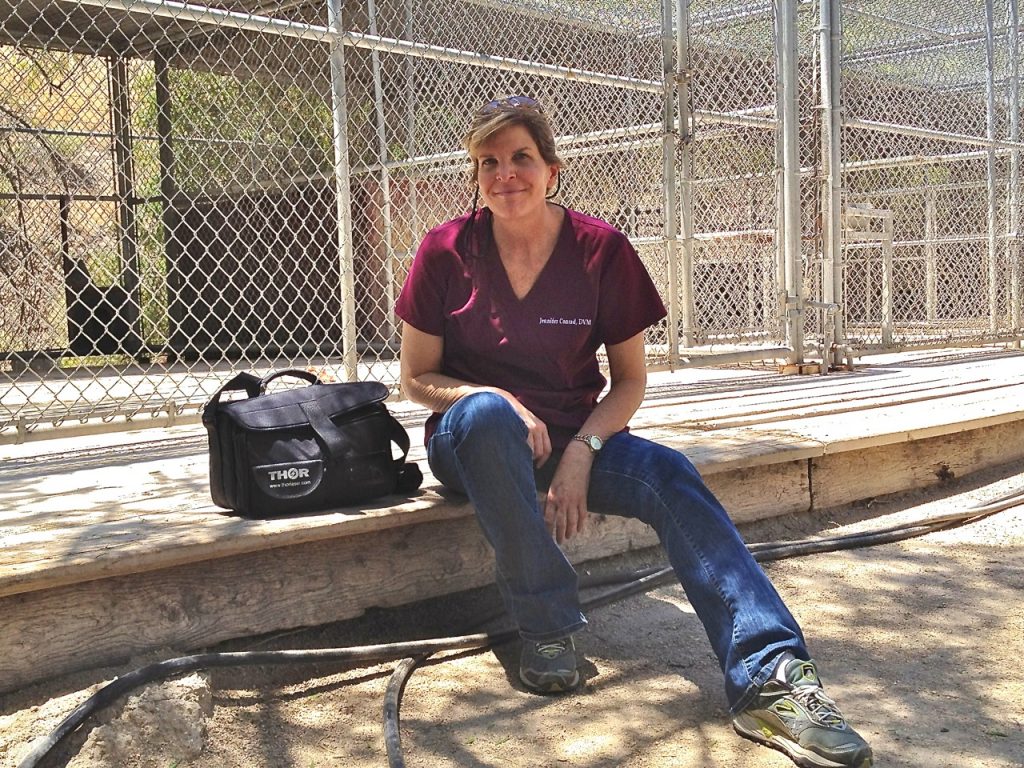
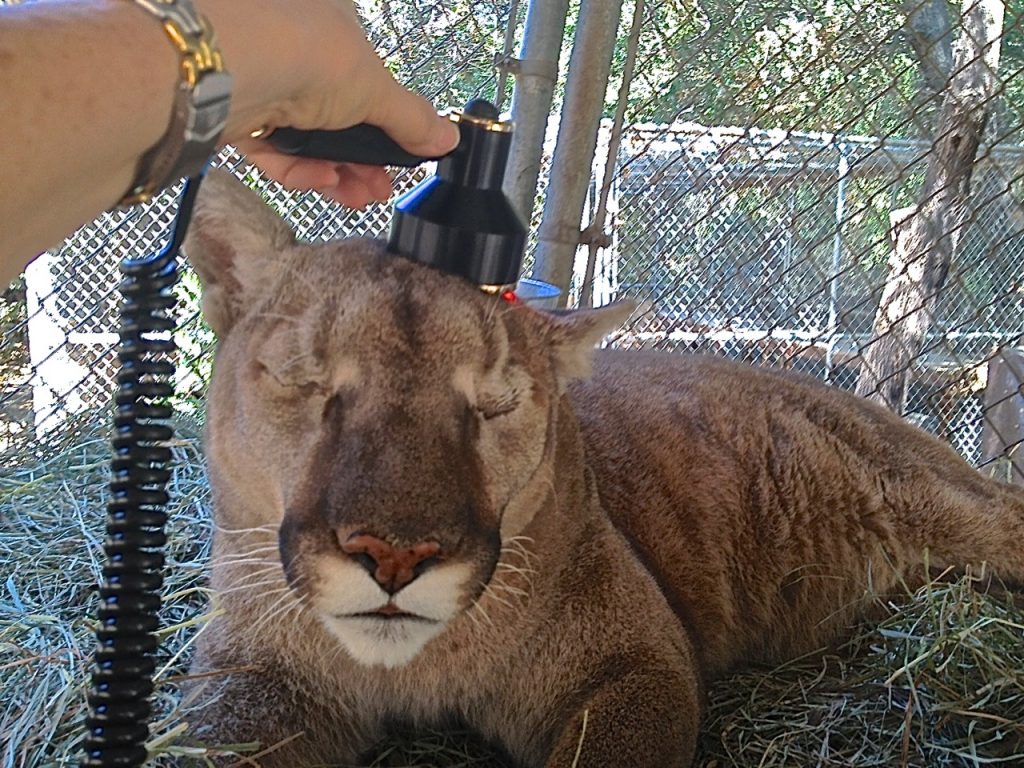
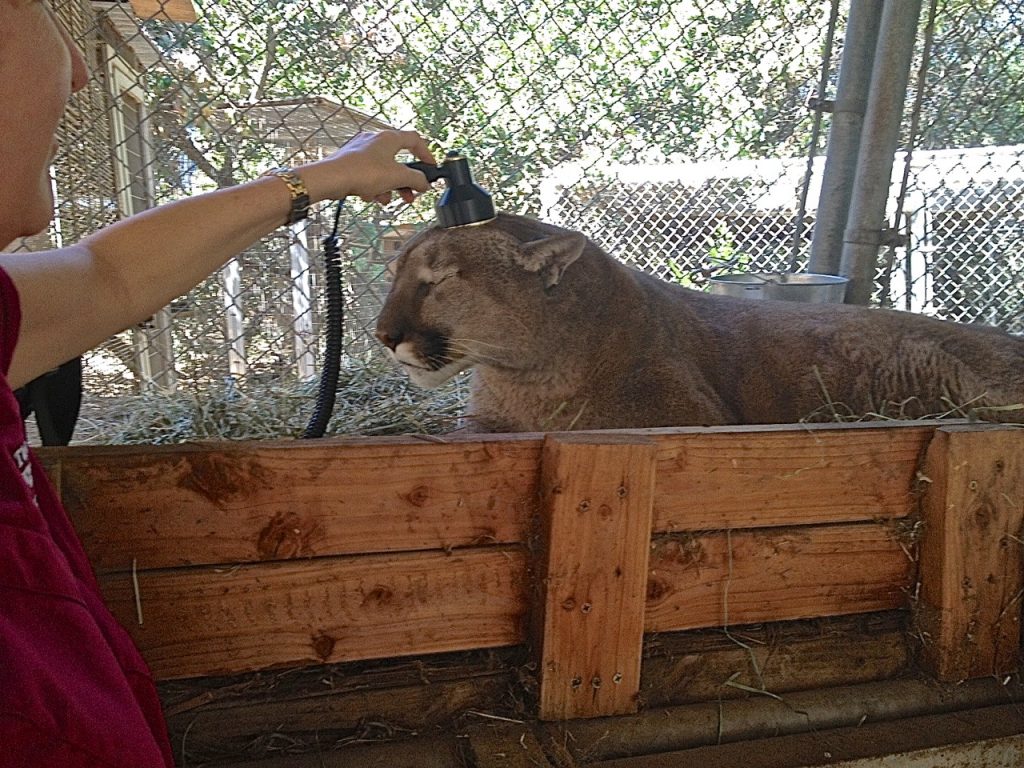
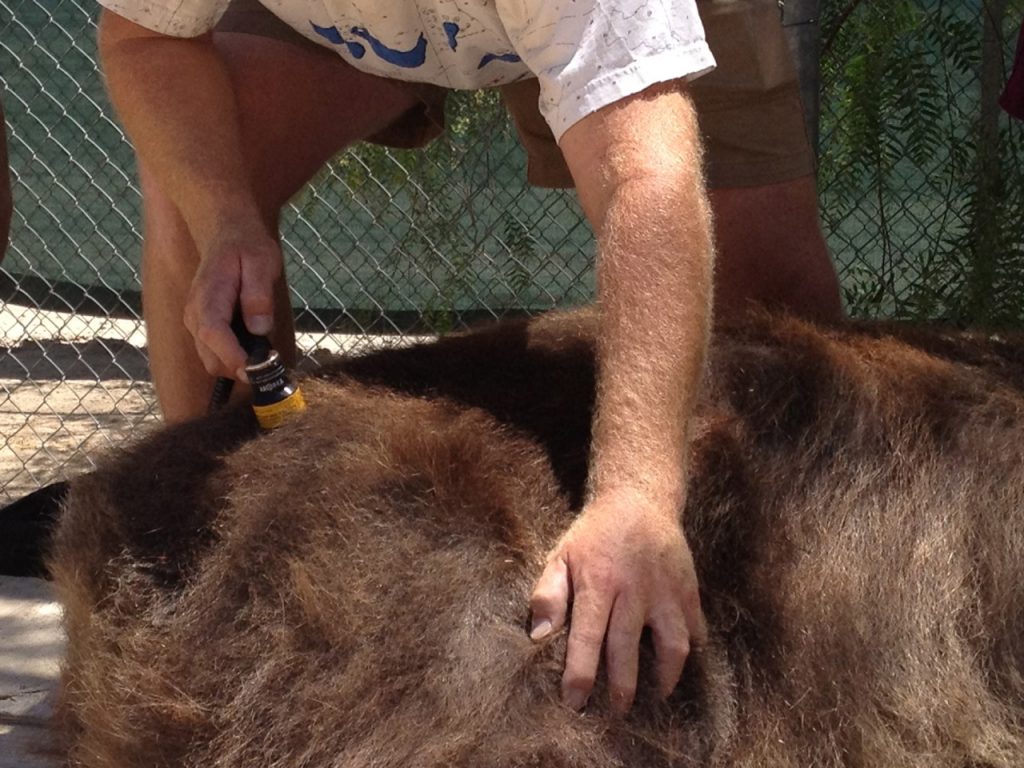
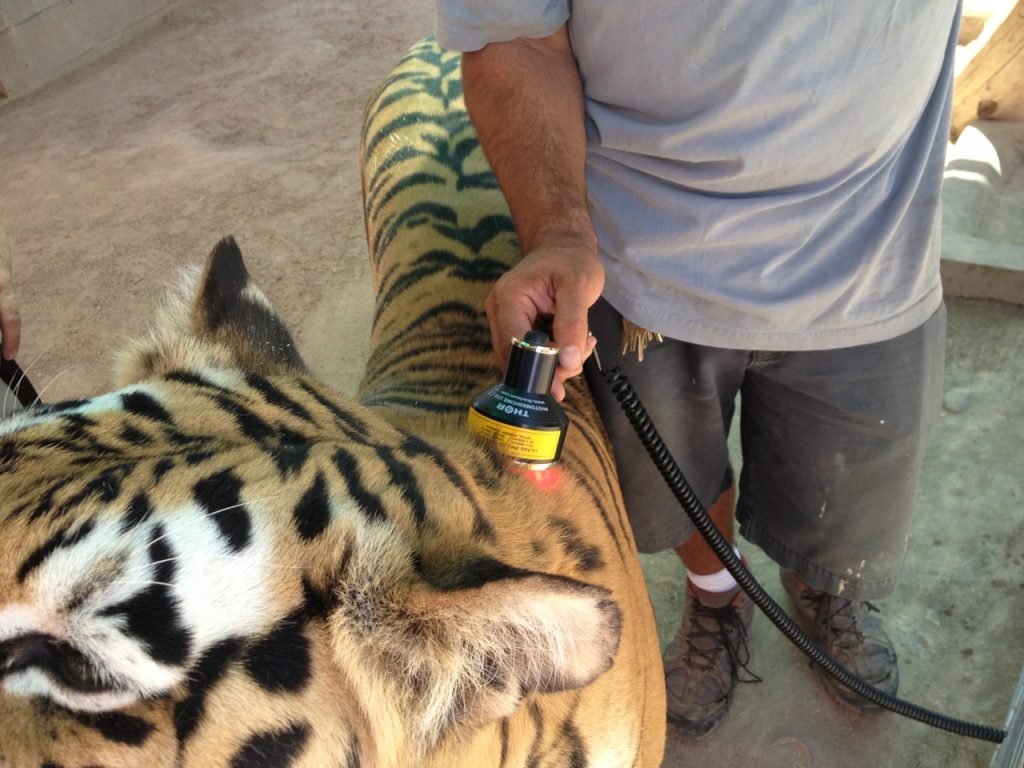
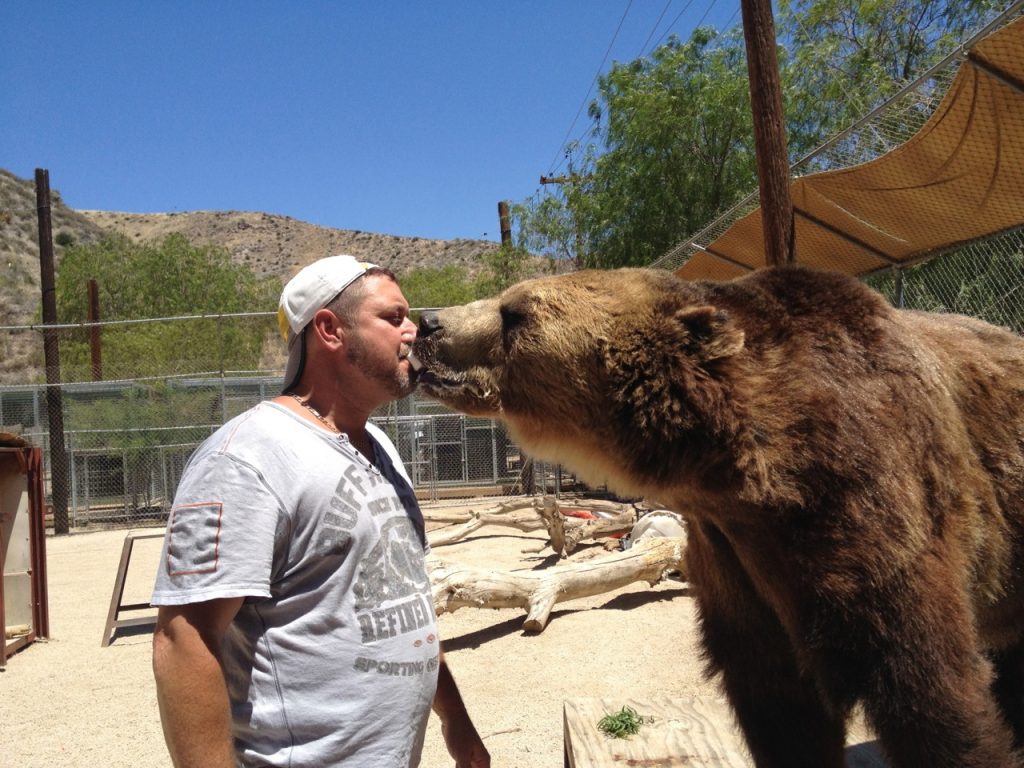
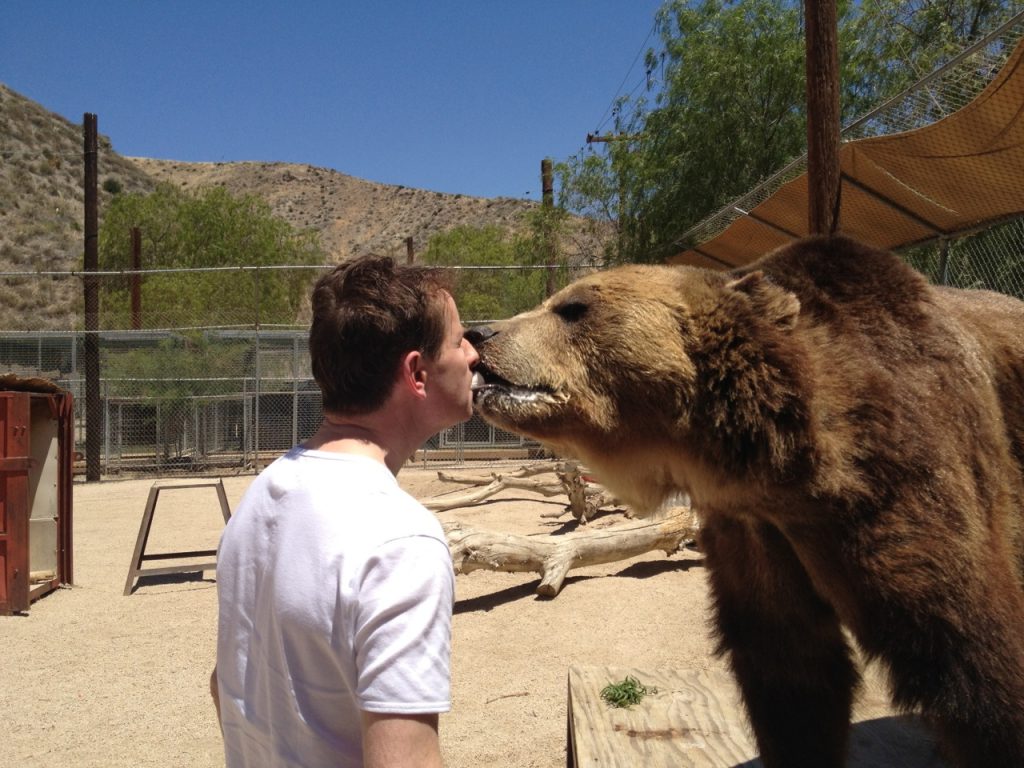
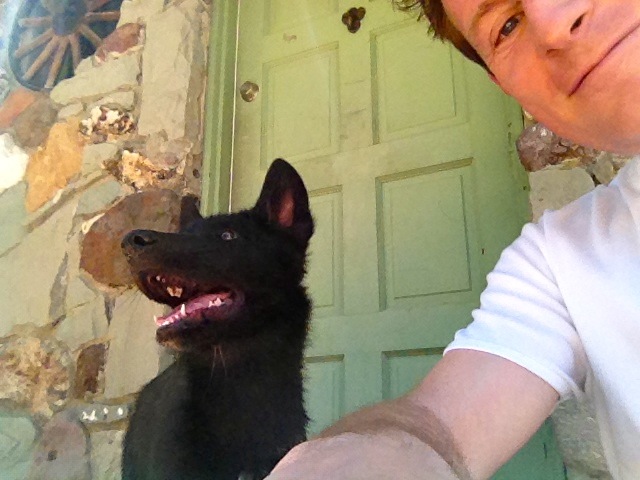
The picture below is of a cougar treated by exotic animal veterinarian Jenny Conrad. She reports that “Pirate had a seizure of unknown origin and fell off his perch. He’s not usually this approachable but he seemed to like his LLLT treatment and let us work on him for about an hour. He purred the whole time. He seems to be feeling better this afternoon”.


Posted in Special Feature, Veterinary
on Cougar treated with THOR Low Level Laser Therapy (LLLT) by exotic animal veterinarian Jenny Conrad
In Memoriam Professor Isaac Kaplan: 1919 – 2012
Isaac Kaplan was not an LLLT guru but the first surgical laser pioneer. As you will see below he was a tremendous figure, well known and much loved. I will leave it to Glen to tell his story but will add one anecdote of my own which Isaac told me:
Many decades ago Isaac was the guest of honour at a dinner in China where upon he alone was served a grand imperial treat called Emperors Soup. The hosts and other guests gathered around to watch in awe as he enjoyed this great delicacy. As Isaac gazed into his soup he saw something moving. Nervously, he picked up his spoon and, bringing the offending creature to the surface, wondered if he should call the waiter to complain. But, as he looked around, he saw the faces of his audience full of delight and encouragement, fervently hoping he would enjoy the wriggling delicacies. He dutifully ate them, attempting to show his enjoyment. Later, he eventually summoned up the courage to ask what he had consumed. It turned out to be live sea mice.
Written by R Glen Calderhead (reproduced with permission)
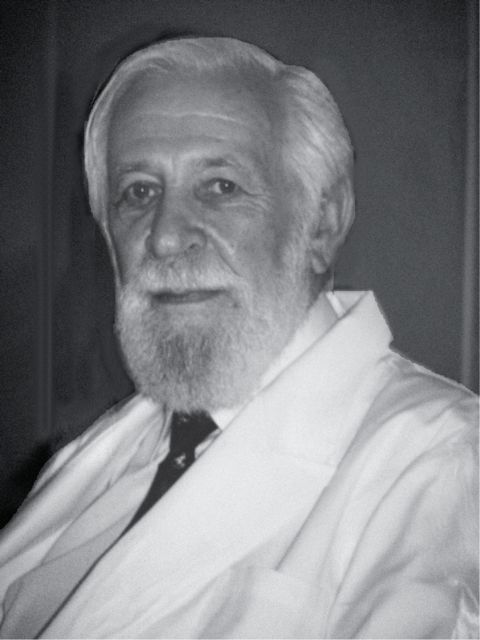
It is with profound regret and a deep, inestimable and visceral sadness that we at Laser Therapy must note the passing of Professor Isaac Kaplan, no stranger to the pages of this journal, who died peacefully in hospital on August 4th, 2012, following an operation, with his family and his beloved wife Masha at his side. Although a giant of a man in every respect, he was at the same time one of the most humble and true gentlemen it has ever been the author’s pleasure and honour to know. His 93 years plus on this earth were filled with some of the most incredible escapades which are more the stuff of adventure novels than actual real life, coupled with his incurable romantic side. Isaac, you leave a gaping hole that no-one will be able to fill. We shall remember you.
Born in 1919 in Kroonstad, South Africa, as a young man Isaac was fired up by the visit to South Africa of Ze’ev Jabotinsky, founder of the Revisionist movement, and by the age of 20, as a committed Zionist and Revisionist, he had already embarked on some maritime adventures which did not quite end up as planned, since Isaac found himself locked up at gunpoint after a mutiny by the crew of the vessel he was sailing with. All in a day’s work, however.
With the outbreak of World War II in 1939, Isaac volunteered for the South African army and served with the British Army in North Africa, in the Western Desert Campaign. As a demobilized soldier, he was accepted into Witwatersrand University in Johannesburg where he studied medicine, and in 1952 Isaac emigrated to Israel, where in 1954 he completed his specialist training in general surgery at the Hadassah University Hospital in Jerusalem. From there he went to England to train in plastic surgery with Sir Harold Gillies, one of the real pioneers of modern plastic and reconstructive surgery worldwide. In 1956, what Isaac always said was the most important day of his life, he married Masha, and they were inseparable till the very end. Theirs was one of the greatest love stories the author has ever seen in real life.
In 1958, having returned to Israel, Isaac established and headed up the Department of Plastic and Reconstructive and Maxillofacial Surgery, Beilinson Hospital. Israel, now associated with Tel Aviv University, where he remained until 1989, and also established the first burns unit in Israel. During this period, in 1968 he went with Masha to Vietnam in the height of the Vietnam war and for 2 years he and Masha headed up an International Team under the auspices of the “Children’s Medical Relief International”, establishing in Saigon a hospital offering plastic and maxillofacial surgery for children who were victims of the war. Masha’s responsibility was the running of all aspects of the hospital, being a trained and experienced nurse, and this she did, with Isaac at her side, from day one till the end of the project. Both Isaac and Masha were revered by the Vietnamese people, winning hearts and minds with his selfless work at the hospital. During this period, Isaac was appointed Professor of Surgery and Incumbent of the Chair of Plastic Surgery, Tel-Aviv University, Medical School.
He had real interest in the laser as a surgical tool, and was particularly attracted by the carbon dioxide laser, starting a love affair with the CO2 which lasted right up till the day he died. He always felt that. of all the lasers which sprung up after Maiman’s ruby laser in 1960, the CO2 had the greatest surgical potential due to its strong absorption in water, of which human tissue contains plenty. As part of this, together with his engineer colleague Uzi Sharon, in 1972 he co-developed the Sharplan CO2 laser, and the Sharplan laser company became one of the most lasting of all laser companies. Isaac’s goal with the Sharplan system was to deliver a system designed for clinicians by a clinician, and to provide a laser which was not a solution in search of a problem, one of Isaac’s criticisms of the early CO2 systems in the late 60’s, but a laser which was designed to solve specific surgical problems, using a handpiece with which surgeons could work just as easily as a scalpel. It should be noted that Isaac refused to take a single share or any monetary reward from the company because he did not want to do this for his own sake or that of his pocket, but for the good of the surgical community and mankind. Devotees of the early Sharplan systems will remember fondly (or perhaps not so fondly) the horizontal box-like beam mounted on the console just around head height which contained the laser tube, rather than its being in the console. That beam claimed many a surgeon’s and nurse’s unwary head, due to the convenient height at which it was placed! Isaac worked constantly at developing indications for the CO2 laser, and also at improving medical laser instrumentation and accessories. He always wanted to produce a CO2 laser that was cheap but efficient, and one of the later iterations of this in the 1980’s was the Pendulaser, a small CO2 laser which hung from a stand, complete with a fairly flexible hollow light guide delivery device as one of the accessories. This system was a Kaplan family miracle, with Isaac’s son-in-law in charge of the whole project.
In 1975, he organized the first meeting of the International Symposium of Laser Surgery, which was the embryonic form of the International Society for Laser Surgery and Medicine, the first such society devoted to the practice of and research into laser surgery and medicine. There were around 65 attendees at that Tel Aviv meeting, but by the time the 4th ISLSM congress was held in Tokyo as “Laser Tokyo ’81”, there were over 1000 participants, giving some idea of how rapidly the field had developed in such a short time. It was at this meeting that the author first had the pleasure of meeting Isaac and. of course, Masha, and was the beginning of a friendship which developed into deep affection. Isaac also founded the Israeli Society of Laser Surgery and Medicine, for which he served as President till 1995. This inspired the formation of many societies worldwide serving laser clinicians and researchers, and Isaac gradually nurtured the idea of a federation of medical laser societies to help unify the field and prevent fragmentation of ideas, research and personnel. The net result was the founding of the World Federation of Societies for Laser Medicine and Surgery in Tokyo, 2005, of which Isaac became Honorary President, having been awarded Honorary Life Presidency of the ISLSM in 1979.
During his lifetime of service to laser surgery, Isaac was the recipient of many awards, but with typical reticence, he never referred to any of them, among which were the Roschild Prize for Innovation in Israel (1986), the prestigious Dieffenbach Award for Plastic Surgery (1991), and the William B Mark Memorial Award for outstanding contributions to laser surgery and medicine from the American Society for Laser Medicine and Surgery (1999). Isaac was awarded honorary professorships from medical schools worldwide, and was elected an honorary member of several leading societies including the International Society for Plastic Surgery. In addition to the ISLSM ands WFSLMS, he was honorary president of several leading laser societies, including the ASLMS. Isaac was a prolific writer, with more than 200 professional articles to his name in the international literature, four books on laser surgery, two books on plastic surgery (among which was the first book on plastic surgery in Hebrew), and contributed chapters to several other books.
It was in another sort of writing that Isaac found his ‘real’ métier. In addition to some prose works, he developed a penchant for expressing himself in rhyming couplets which fully evolved a few years ago, when he started to deliver welcome, opening and farewell addresses to a number of international laser society congresses entirely in rhyme. Very often his poetry contains some excellent examples of typical Anglo-Saxon humour, (as did his everyday speech!) but equally often it can represent a serious treatise on surgical techniques with the CO2 laser. In one well-known example (“The CO2 Laser In Surgery”. Laser Therapy, 2000; 18: 126”) Isaac took us through every known speciality from head to foot and everywhere in between with at least one indication at which the CO2 laser would excel. He concluded; “So finally I wish to state without fear of contradiction / That the CO2 laser in surgery has no restriction”. Laser Therapy was often a medium for Isaac’s poetic gems, and from Volume 19 Issue 4, he had his very own section in the journal, “Kaplan’s Corner”. He actually published 4 books, all very much worth reading, which provide a deep and often autobiographical, often VERY humourous, insight into the man who was Isaac Kaplan: Sailor, Soldier, Salesman, Surgeon (2004); The Wondering Jew (2004); Rhyme Time, an Apology for an Anthology (2009); and The Wanderers (2010). The author suggests that, if readers are offered the chance, they should certainly try and get hold of the set: they are well worth the read.
Isaac was extremely generous with his own time, and had trained many hundreds of deserving doctors without any fee whatsoever. In addition to his generosity of spirit, Isaac was a true Romantic, a gentleman and a scholar, and a really good friend in times of adversity: but he was a man who certainly did not suffer fools gladly, and took no prisoners during question and answer time in congresses, but only when it was required. Pity help the unwary speaker who unwittingly said anything against the CO2 laser, or touted another ‘inferior’ system for some new indication. It became an Isaac catchphrase; “You could do that better with the CO2 laser!” he would growl in his totally inimitable, gravelly South African drawl. When he first started to get involved in LLLT, he always said he didn’t know why we had chosen him, because he was a CO2 man and a surgeon through and through, but finally he was actively advocating the defocussed CO2 (of course) after any surgical procedure for LLLT to accelerate wound healing and ameliorate postoperative pain. In fact, they say when Isaac was introduced to God just a few short weeks ago, as was his right as an honoured new-comer having passed straight through the Pearly Gates, God entertained Isaac with some of His well-known God-like feats.
“What did you think of Moses and that burning bush then?” asked God. “Pretty strong stuff, eh?”
“Hrrrmmph!” growled Isaac. “You could have done that better with the CO2 laser!”
We cannot talk of Isaac without mentioning Masha. From Laser Tokyo ’81, Masha and Isaac became the Matriach and Patriach of laser clinicians, researchers and nurses from all corners of the globe, and when we saw Isaac and Masha together, we saw true love. Their laser family has expanded from a few to a few hundred. They were inseparable, which is why our thoughts and prayers are very much with Masha just now, and of course the rest of the family. Masha wrote to the author after Isaac’s death with what is probably one of the most touching and true summations of Isaac and his life, and the special relationship between Masha and her husband. She was, from the first to the last, his dedicated nurse.
“For 9 weeks I sat next to him in the hospital – 12 hours a day. He constantly told me how much he loved me and even two hours before he died he told me he loved me from the first moment he saw me and was holding on because of me.
“He was the same Isaac, kind and full of humour until the last minute. He just closed his eyes and looked exactly the same Isaac we all loved.
“He died, as he lived, in honour.”
Isaac is survived by his loving and much loved wife Masha, their daughter Dr Carmi Harel and her husband Alex, and 5 grandchildren.
Professor Isaac Kaplan …… gone, sadly missed, but never, ever, forgotten.
“And I shall hear you tread the earth above me
And, oh, my grave shall quieter, sweeter be.
And you shall bow, and tell me that you love me,
And I shall rest in peace, until you come for me.”
(from Frederic Weatherly’s Danny Boy: set to the Londonderry Air)
Posted in Special Feature
on In Memoriam Professor Isaac Kaplan: 1919 – 2012