Masters graduate found LED therapy had positive effect on muscular performance

Tom Hemmings, a Masters graduate student at Georgia Southern University

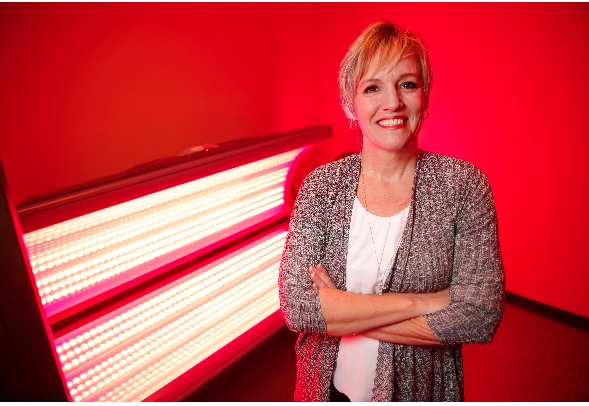
Great news, Tom Hemmings, a Masters graduate student at Georgia Southern University, found that LED therapy had a positive effect on muscular performance. THOR helped Tom decide on a thesis topic in December 2013, which he completed this past week.

The study itself identified the effects of various dosages of LED on the total repetitions performed during an eccentric leg extension. The dosages of 60 seconds and 120 seconds on each point were found to significantly increase repetitions when compared with the placebo trial.

This study suggests that LED can enhance muscular performance when applying the THOR laser prior an exercise bout.

Posted in Research | on Masters graduate found LED therapy had positive effect on muscular performance

Course Testimonial: Dr. Sathish Harinarayanan

Dr. Sathish Harinarayanan a Radiation Oncologist treating cancerLLLT Training Course Testimonial, London UK: Dr. Sathish Harinarayanan a Radiation Oncologist treating cancer.

What did you like about the training? Wide mixture of audience; good evidence shown; Safety; convinced to use; well targeted for audience.

Was the course material useful? Ideal :)

Overall percentage for the day: 100%

5 Stars for Speaker, Venue and Location.

Posted in Testimonials | on Course Testimonial: Dr. Sathish Harinarayanan

Sea otter patient being treated for uveitis

Valerie Gause, our Veterinary Division National Sales Director for US and Canada was sent this neat story from Lesanna Lahner at Seattle Aquarium.

Hi Valerie,

Sea otter patient being treated for uveitis with laser therapyHere’s our first patient being treated for uveitis! 18 yr old northern sea otter that was orphaned at 1 week of age when her mom was hit and killed by a boat in Alaska. Her name is Lootas. She did great for her laser treatment.

We hope to keep her off NSAIDs (topical and systemic) with her new treatment.

Talk soon!
Lesanna

View current Photobiomodulation therapy training dates in your location.


Posted in Veterinary | 2 Comments

Literature watch update: End 2014

130 new LLLT papers for you including a systematic review on shoulder tendinopathies, a lovely article review in an orthopaedics journal by Howard Cotler, four systematic reviews on orthodontic tooth movement, a trial showing LEDs improve sperm motility, another systematic review on oral mucositis and much more.

The Efficacy of Low-Level Laser Therapy for Shoulder Tendinopathy: A Systematic Review and Meta-Analysis of Randomized Controlled Trials.

Haslerud S, Magnussen LH, Joensen J, Lopes-Martins RA, Bjordal JM

Centre for Evidence Based Practice, Faculty of Health and Social Sciences, NorPhyPain Research Group, Bergen University College, Bergen, Norway; Department of Global Public Health and Primary Care, Physiotherapy Research Group, University of Bergen, Bergen, Norway.
Continue reading

Posted in Research | on Literature watch update: End 2014

BMJ snubs LLLT for neck pain again, but gives drugs with no evidence a pass

As reported here in 2013 there are no licensed drugs for non-specific neck pain because “there isn’t much specific research that shows drugs help neck pain”. For LLLT/PBM however, there are at least 16 (mostly positive) RCTs and a positive systematic review  published in The Lancet. Despite this unequivocal evidence, the 2014 revised patient advice leaflet from the BMJ fails to mention LLLT/PBM but states “your doctor may recommend one or more of the following” and goes on to list pain killers, NSAIDs, antidepressants and muscle relaxants”.

Last year I pursued someone at the BMJ, supplied them with the necessary data including controversial papers and rebuttals (5 months ahead of online publication on their own website). I obtained confirmation it was received and passed to “the Best Practice team who have logged it for the next review”, but as you can see, my efforts were unrewarded and LLLT/PBM did not get a mention. Unfortunately my contact there has left the journal so I have to find a new way in to gain an explanation.

The BMJ prides itself on impartiality and evidence based advice, so it is a mystery to me how this can happen. Watch this space for another 8 months!

Posted in Rants | on BMJ snubs LLLT for neck pain again, but gives drugs with no evidence a pass

Pubmed to adopt “Photobiomodulation Therapy” as a MeSH term

The US National Library of Medicine (NLM) plans to adopt “Photobiomodulation Therapy” (PBMT) as an official MeSH term in November 2015.

Why this is important?

Continue reading

Posted in THE FUTURE OF PBM/LLLT | on Pubmed to adopt “Photobiomodulation Therapy” as a MeSH term

LLLT and Roberta Chow in the news “Laser therapy: making light of hidden pain”

Paul Barton did not realise the impact pain had on his life until it went away.

Some mornings before he went to work at UBS, Paul Barton was in such pain he would hobble or even crawl to the bathroom.

Once his medication had taken effect, he was functional and could manipulate his painful feet into his business shoes.

His next challenge was to get to the waiting taxi, which he shared with two other bankers, for the daily ride into the city.

Never disclosing his discomfort and shrugging off his limp as an old sporting injury, he would dread the walk across the foyer to the lifts at Sydney’s Chifley Tower.

By the time he made it to his desk in the equities advisory team, he was ready to stay put all morning.

Other days it wasn’t so bad and he could walk normally.

Barton had lived with chronic pain, on and off, throughout his life. At the age of seven he developed arthritis, slept in leg splints and remained unable to participate in sport until, at the age of 14, his arthritis disappeared as mysteriously as it had arrived.

It left a legacy and at 22, he developed gout which never completely cleared.

It would flare unexpectedly and become so painful he could not put any weight at all on the afflicted foot.

Hiding the pain
Banking is not an industry for the wounded and careful not to be perceived as such, for more than a decade Barton masked his condition with jokes and bonhomie.

All the while he took medication that devastated his gut.

Privately he sought help everywhere, in Australia and abroad, where he worked as an equities broker into the global financial crisis.

By the time he returned to Australia in 2009, he was at his wit’s end. By sheer serendipity, his mother-in-law was a general practitioner who specialised in an unconventional form of pain management.

She had pioneered of the use of low-level laser therapy (LLLT) in pain management and had long struggled for mainstream acceptance.

For most of her career, Roberta Chow has followed an orthodox path, sitting on regulatory committees and examining boards.

But when she came across LLLT in 1988, she was impressed by its effectiveness. Later, when she tried to get approval for it, she was surprised at how readily many of her colleagues dismissed it as quackery.

When the National Health and Medical Research Council issued a paper saying if people wanted to use alternate therapies they needed to provide evidence, she took the challenge.

Benefits of low-level lasers
At the age of 50, Chow, a mother of four, undertook a PhD at Sydney University on the use of LLLT in neck pain and then published her results in the journal, Pain. When she submitted another piece to the prestigious journal The Lancet, its editorial team was sceptical and for two years, the paper went back and forth for checking and revision.

Then, after having her work scrutinised by a forensic statistician, The Lancet published it.

The paper concluded that LLLT reduces pain immediately after treatment for acute neck pain.

It also reduces pain for up to 22 weeks after completion of treatment for chronic neck pain.

Chow went on to train further at the Pain Management and Research Centre of Sydney’s Royal North Shore Hospital and to publish in several journals. Over time, the therapy gained a little more acceptance and she lost interest in the fight for formal recognition, preferring instead to continue managing people’s pain in her practice in the Hills district of Sydney.

When LLLT started helping her son-in-law, he became interested in the modality, began researching it and attended an international conference on the subject.

As Barton sat in the conference of the World Association of Laser Therapy, a new domain opened before him.

Convinced this was the next generation of pain medicine, he decided to give up banking to dedicate himself to the business of making LLLT mainstream.

“When you are treated – and you are a responder – you just ‘get it’. I have been able to get on top of my health issue and can walk around without anticipating pain.

“Containing pain used to be my major focus and I never realised the impact it was having on my life until it went away.”

Barton and Chow have now opened a city clinic, Quantum Pain Management, which uses LLLT as a cornerstone therapy, as well as conventional treatments.

This form of laser therapy has been used for at least 30 years for pain reduction and tissue repair. There is strong evidence it works and new research is constantly being conducted to refine it.

Although little known in Australia, it is widely used in Japan and some Scandinavian and European countries.

Roberta Chow, an authority in the use of the laser therapy for pain, says it uses different lasers from those used in surgery.

Surgical lasers use intense heat to ablate tissue. As the name suggests, low-level laser therapy , LLLT, uses low energy light. It emits no heat and is non-invasive. Some call it “cold laser”.

And one size does not fit all. Chow says the wavelength and the duration of exposure are determined by the condition that is being treated.

It works by blocking pain fibres and slowing the transmission of pain messages. This pain blockade has a flow-on effect and allows for a reduction in inflammation and for tissue regeneration.

“While stopping the pain allows the muscles to relax and anxiety to subside, it doesn’t mean patients are cured. No matter how good they feel, it takes six weeks for the repair processes to take place,” Chow says.

In one way, LLLT acts like a local anaesthetic and reduces pain signals going to the brain. But it aims to do more than that. The purpose is to program the pain system.

Chow says after several treatments the nerves in the affected area become less irritable and pain lessens, allowing muscles to relax and healing to take place.

While some conditions are curable, some need ongoing maintenance and patients need to return for a treatment every three months.

The elderly respond particularly well . and it helps to reduce their drug load.

While not everyone responds to LLLT, it is used to treat a variety of conditions including neck and back pain, acute and chronic pain, migraine, wounds, arthritic pain, fibromyalgia and lymphedema.

No serious side effects have emerged and while most patients have none at all, some feel tired, nauseated, or dizzy for a few hours after the treatment.

The Australian Financial Review

Original story here on WayBack Machine


Posted in Interviews | on LLLT and Roberta Chow in the news “Laser therapy: making light of hidden pain”