Categories
Essays
Links
Category Archives: Research
ALD PBM Symposium – October 14, 2020 Session
James Carroll, FRSM, CEO | THOR Photomedicine Ltd, Amersham, Buckinghamshire, United Kingdom
Photobiomodulation for Orofacial Pain
Photobiomodulation (PBM) has many applications in dentistry with clinical trial evidence published for a wide range of painful pathologies, including postoperative pain, aphthous ulcers, orthodontic pain, burning mouth syndrome, postherpetic neuralgia, trigeminal neuralgia, stomatitis, oral mucositis, dentin hypersensitivity, temporomandibular disorder (TMD), and neck pain. PBM can also be used to desensitize teeth and even induce anesthesia.
How does PBM do this, what is the evidence, and how does one treat a patient? What treatment parameters (wavelength, power, beam area, irradiance, pulses, treatment time, energy and fluence) are required for a successful treatment? How much PBM is enough, how much is too much, how many treatments are needed, what intervals are required between treatment? What are the contraindications and treatment reactions, and are there any adverse effects? This presentation will address these issues.
Educational Objectives
- Relate the potential range of PBM applications.
- Describe how PBM works.
- Understand dose as it relates to PBM treatment.
- Comprehend how to treat various dental conditions with PBM.
Read more: https://www.thorlaser.com/oralmucositis/
View current photobiomodulation therapy training dates in your location.
Posted in Industry, Information Videos, Research, Video of the Week
on ALD PBM Symposium – October 14, 2020 Session
RIP Dr Kevin Moore who died last week 15 July 2020
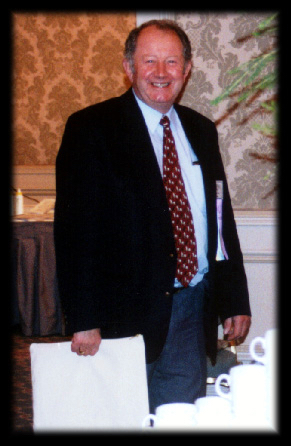 Kevin was a husband, father, anaesthetist, chronic pain specialist, researcher, a fun, kind and generous man.
He was a vital founding member of the World Association for Laser Therapy (WALT) and a long-standing cheerleader for Photobiomodulation (PBM) as it is now known.
As well as being Consultant Anaesthetist at The Royal Oldham Hospital UK, Kevin was medical director at Dr Kershaw’s Hospice.
Kevin also had the thankless task of being the WALT treasurer for many years. His leadership and steady hand ensured the organisation survived several problematic periods.
All who met him will remember his warmth, humour and generosity of spirit.
He will be forever memorialised in my LLLT/PBM presentations as he researched and published two of my favourite PBM papers of all time (abstracts below and links to some PDFs).
I have converted some of his slides into this 4 minute movie and managed to lay some audio over it which was recorded about 20 years ago. Given this is one of the worst kinds of pain any one can suffer it is remarkable that such a simple tool can achieve such good results.
So thank you to Kevin for your contribution to the world, and our condolences to Jill, his wife and his children. Kevin was a special man, I know he will be missed.
His local new paper reports his death here https://www.oldham-chronicle.co.uk/news-features/139/main-news/135491/tributes-paid-to-muchloved-dr-moore
Other newspaper reports about Kevin https://www.manchestereveningnews.co.uk/news/local-news/easing-the-burden-for-patients-in-pain-1134114
ABSTRACTS WITH PDF LINKS BELOW
THE EFFECT OF INFRARED LASER IRRADIATION (LLLI) ON THE DURATION AND SEVERITY OF POSTOPERATIVE PAIN: A DOUBLE BLIND TRIAL
Kevin C. Moore, Naru Hira, Ian J. Broome* and John A. Cruikshank
Departments of Anaesthesia and General Surgery, The Royal Oldham Hospital, Oldham, U.K *Department of Anaesthesia, The Royal Hallamshire Hospital, Sheffield, U.K., General Practitioner, Pennymeadow Clinic, Ashton-under-Lyne, U.K.
This trial was designed to test the hypothesis that LLLT reduces the extent and duration of postoperative pain. Twenty consecutive patients for elective cholecystectomy were randomly allocated for either LLLT or as controls. The trial was double blind. Patients for LLLT received 6- 8-min treatment (GaAlAs: 830 nm: 60 mW CW: CM) to the wound area immediately following skin closure prior to emergence from GA. All patients were prescribed on demand postoperative analgesia (IM or oral according to pain severity). Recordings of pain scores (0-10) and analgesic requirements were noted by an independent assessor. There was a significant difference in the number of doses of narcotic analgesic (IM) required between the two groups. Controls n = 5.5: LLLT n = 2.5. No patient in the LLLT group required IM analgesia after 24 h. Similarly the requirement for oral analgesia was reduced in the LLLT group. Controls n = 9: LLLT n = 4. Control patients assessed their overall pain as moderate to severe compared with mild to moderate in the LLLT group. The results justify further evaluation on a larger trial population
Laser Therapy, 4: 145-150. 1992
A DOUBLE BLIND CROSSOVER TRIAL OF LOW LEVEL LASER THERAPY IN THE TREATMENT OF POSTHERPETIC NEURALGIA
Moore, K.C., Hira, N., Kumar, P.S., Jayakumar, C.S., and Ohshiro, T
Postherpetic. neuralgia can be an extremely painful condition which in many cases proves resistant lo all the accepted forms of treatment. It is frequently most severe in the elderly and may persist for years with no predictable course.
This trial was designed as a double blind assessment of the efficacy of low level laser therapy in the relief of the pain of post herpetic neuralgia with patients acting as their own controls. Admission to the trial was limited to patients with established post herpetic neuralgia of at least six months duration and who had shown little or no response to conventional methods of treatment. Measurements of pain intensity and distribution were noted over a period of eight treatments in two groups of patients each of which received four consecutive laser treatments. The results demonstrate a significant reduction in the pain intensity and distribution following a course of low level laser therapy.
Laser Therapy Pilot Edition 1:0 Pilot Issue 2 Pages 61-64
Posted in Research
on RIP Dr Kevin Moore who died last week 15 July 2020
Talking Evidence with THOR Photomedicine
THOR Photomedicine work with leading universities and hospitals around the world, providing up to date research data and cutting edge knowledge on training courses. This 2 minute video gives you a small taste/overview of what you can expect attending our one day Photobiomodulation workshop course.
Register today for our comprehensive training and equip yourself with the tools to relieve pain.
Posted in Industry, Information Videos, James in Action, PBM/LLLT, Research, THE FUTURE OF PBM/LLLT, Training, Video of the Week
on Talking Evidence with THOR Photomedicine
Training with THOR Photomedicine
THOR Photomedicine provide the best Photobiomodulation (PBM) / low level laser therapy (LLLT) training in the world. This 2 minute video gives you a small taste/overview of what you can expect attending our one day Photobiomodulation workshop course.
View current photobiomodulation therapy training dates in your location.
Posted in Industry, Information Videos, James in Action, PBM/LLLT, Research, THE FUTURE OF PBM/LLLT, Training, Video of the Week
on Training with THOR Photomedicine
PBM Therapy Literature Watch February 2018
36 Photobiomodulation therapy papers published in February 2018. Highlights include:
- DNA repair mechanisms, modulation of telomere maintenance
- Improved motor response in patients with spinal cord injury
- Prevention of < grade 2 radiodermatitis in breast cancer patients (RCT)
- No adverse effects on SCC primary cancer, recurrence or survival
- Improved physiological and performance parameters in runners
- Improved depth of anaesthesia during endodontic treatment
Posted in Research
on PBM Therapy Literature Watch February 2018
PBM Therapy Literature Watch January 2018
27 Photobiomodulation therapy papers published in January 2018. Highlights include:
- Treatment 6h before + immediately before exercise best for reducing muscle fatigue
- Review of pre-clinical data for dementia, Parkinson’s, stroke, trauma and depression
- Improved bacteriological, cytological and clinical benefits after root planing (RCT)
- Improved wound healing of skin graft donor site (RCT)
- Systematic review of RCTs on LED PBM therapy in dermatology
- NSAIDs vs PBM Therapy post root canal (RCT)
- ESWT vs PBM Therapy for Plantar Fasciitis (RCT)
- Effect of PBM on cerebral hemodynamics and metabolism are not thermal
Posted in Research
on PBM Therapy Literature Watch January 2018
American College of Physicians Guidelines include a “strong recommendation” for Low-Level Laser Therapy as a non-invasive Treatments for Acute, Subacute & Chronic Low Back Pain
Abstract source: https://www.ncbi.nlm.NIH.gov/pubmed/?term=28192789
Noninvasive Treatments for Acute, Subacute, and Chronic Low Back Pain: A Clinical Practice Guideline From the American College of Physicians.
Qaseem A, Wilt TJ, McLean RM, Forciea MA, Clinical Guidelines Committee of the American College of Physicians
From the American College of Physicians and Penn Health System, Philadelphia, Pennsylvania; Minneapolis Veterans Affairs Medical Center, Minneapolis, Minnesota; and Yale School of Medicine, New Haven, Connecticut.
DESCRIPTION: The American College of Physicians (ACP) developed this guideline to present the evidence and provide clinical recommendations on noninvasive treatment of low back pain. Methods: Using the ACP grading system, the committee based these recommendations on a systematic review of randomized, controlled trials and systematic reviews published through April 2015 on noninvasive pharmacologic and nonpharmacologic treatments for low back pain. Updated searches were performed through November 2016. Clinical outcomes evaluated included reduction or elimination of low back pain, improvement in back-specific and overall function, improvement in health-related quality of life, reduction in work disability and return to work, global improvement, number of back pain episodes or time between episodes, patient satisfaction, and adverse effects.
TARGET AUDIENCE AND PATIENT POPULATION: The target audience for this guideline includes all clinicians, and the target patient population includes adults with acute, subacute, or chronic low back pain.
RECOMMENDATION 1: Given that most patients with acute or subacute low back pain improve over time regardless of treatment, clinicians and patients should select nonpharmacologic treatment with superficial heat (moderate-quality evidence), massage, acupuncture, or spinal manipulation (low-quality evidence). If pharmacologic treatment is desired, clinicians and patients should select nonsteroidal anti-inflammatory drugs or skeletal muscle relaxants (moderate-quality evidence). (Grade: strong recommendation).
RECOMMENDATION 2: For patients with chronic low back pain, clinicians and patients should initially select nonpharmacologic treatment with exercise, multidisciplinary rehabilitation, acupuncture, mindfulness-based stress reduction (moderate-quality evidence), tai chi, yoga, motor control exercise, progressive relaxation, electromyography biofeedback, low-level laser therapy, operant therapy, cognitive behavioral therapy, or spinal manipulation (low-quality evidence). (Grade: strong recommendation).
RECOMMENDATION 3: In patients with chronic low back pain who have had an inadequate response to nonpharmacologic therapy, clinicians and patients should consider pharmacologic treatment with nonsteroidal anti-inflammatory drugs as first-line therapy, or tramadol or duloxetine as second-line therapy. Clinicians should only consider opioids as an option in patients who have failed the aforementioned treatments and only if the potential benefits outweigh the risks for individual patients and after a discussion of known risks and realistic benefits with patients. (Grade: weak recommendation, moderate-quality evidence).
Ann Intern Med 2017 Feb 14
Posted in Research
on American College of Physicians Guidelines include a “strong recommendation” for Low-Level Laser Therapy as a non-invasive Treatments for Acute, Subacute & Chronic Low Back Pain