Categories
Essays
Links
Category Archives: Industry
James Carroll interviewed by Linda Bailey
James Carroll, Founder and CEO of THOR Photomedicine interviewed by Linda Bailey, owner of Total You Health.
James discusses facts and myths about the therapy. From why red light is the best for healing of all the colors in the light spectrum, to when he thinks PBM will become more mainstream, he sheds light on where this therapy is today compared to other alternative therapies. Listen to the exciting advances being made and big news about insurance coverage!
A 1 hour video interview.
View current Photobiomodulation therapy training dates in your location.
Posted in Industry, Information Videos, Interviews, James in Action, Video of the Week
on James Carroll interviewed by Linda Bailey
WVU Medicine Children’s, WVU Cancer Institute work to reduce pain in pediatric cancer patients
Chemotherapy is difficult for any child, but when it causes mucositis, a painful side effect that causes ulcers to form in the mouth, it gets even harder. These children often require more pain medications and longer hospital stays.
Ben Wilson, 11, of Dilliner, Pa., was one of those patients. He was diagnosed with Ewing sarcoma. The chemotherapy regimen he was on was known to cause mucositis, but it was his best course of treatment. When he developed mucositis, his mother, Alison Wilson, talked to Dr. Hannah Hazard-Jenkins, director of the WVU Cancer Institute, about the trouble Ben was having with sores in his mouth and how difficult it was to maintain a lengthy mouthwash regimen to try to treat them.
“We tried some preventive treatments, including cold therapy, where you have them eat a lot of ice and do a series of seven mouthwashes, ” Alison Wilson said. “The cold therapy didn’t help much. Plus, it’s hard to use seven mouthwashes in a day, especially if you’re a kid, and they don’t taste very good.”
Hazard-Jenkins reached out to Dr. Geraldine Jacobson, WVU Cancer Institute Radiation Oncology chair, who contacted the pediatric oncologists at WVU Medicine Children’s to discuss whether the WVU Cancer Institute’s new THOR device would help Ben.
The THOR Photobiomodulation device uses low-level lasers in the near-infrared range that stimulate and promote wound healing and regeneration.
“Low-level laser therapy is indicated by a multinational supportive care association for treatment of oral mucositis in adults, ” Jacobson said. “We have been using this treatment in the Department of Radiation Oncology since June to reduce oral mucositis in our head and neck cancer patients. The THOR device can be used outside the mouth along the cheek, jaw and neck to prevent mucositis lesions or inside the mouth to treat active wounds. There were positive reports of using this treatment for pediatric patients, so we decided to offer it to Ben.”
Dr. Patrick Tomboc, chief of WVU Medicine Children’s Hematology and Oncology, said he was amazed at how quickly the treatments helped Ben and prevented new sores from forming.
“This device greatly improves the quality of life for these patients, ” Tomboc said. “Ben has required much less pain medication than most patients who develop mucositis. We’ve been able to reduce the length of his hospital stays and really help with his pain management without any side effects.”
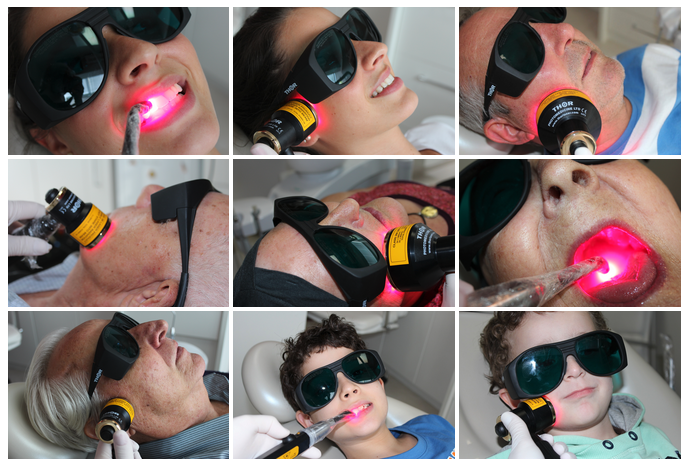
The device is also indicated for use in wound healing, which helped Ben when the surgical wound on his foot was slow to heal.
“Ben had really been struggling with his wound healing all summer, and it’s always a concern when you start chemotherapy with an open wound because it can slow healing even more, leaving it open to possible infection, ” Alison Wilson said. “After a nurse in Radiation Oncology suggested we try it on his foot as well, we discussed it with his doctors. There were so few possible side effects that we decided to go ahead and see if it would help. We had more healing in one month than we had all summer.”
“We’re really grateful that they were willing to look into using this device on kids to see what other institutions were using it and the pros and cons of the treatment. We’re also really excited that it has opened the door for other pediatric patients here, ” she added.
Source: news.yahoo.com
Read more: https://www.thorlaser.com/oralmucositis/
View current photobiomodulation therapy training dates in your location.
Posted in Industry
on WVU Medicine Children’s, WVU Cancer Institute work to reduce pain in pediatric cancer patients
Managing Oral Mucositis with PBM
Annette Quinn, RN, MSN | UPMC Hillman Cancer Centers, Pittsburgh, Pennsylvania
This session focuses on the use of Photobiomodulation (PBM) in the management of oral mucositis in oncology patients.
Educational Objectives
- Identify the prevalence of oral mucositis (OM) in the oncology population.
- Describe the benefits of PBM in the management of OM in this population.
- Identify barriers to implementing a PBM program in oncology
Read more: https://www.thorlaser.com/oralmucositis/
View current photobiomodulation therapy training dates in your location.
Disclaimer: These comments by healthcare professionals and their patients are solely their own. They are uncompensated personal stories about how they have used, or been impacted by, light therapy. These uses have not been reviewed or cleared by FDA.
Posted in Conference, Industry, Information Videos, Research, Video of the Week
on Managing Oral Mucositis with PBM
ALD PBM Symposium – October 14, 2020 Session
James Carroll, FRSM, CEO | THOR Photomedicine Ltd, Amersham, Buckinghamshire, United Kingdom
Photobiomodulation for Orofacial Pain
Photobiomodulation (PBM) has many applications in dentistry with clinical trial evidence published for a wide range of painful pathologies, including postoperative pain, aphthous ulcers, orthodontic pain, burning mouth syndrome, postherpetic neuralgia, trigeminal neuralgia, stomatitis, oral mucositis, dentin hypersensitivity, temporomandibular disorder (TMD), and neck pain. PBM can also be used to desensitize teeth and even induce anesthesia.
How does PBM do this, what is the evidence, and how does one treat a patient? What treatment parameters (wavelength, power, beam area, irradiance, pulses, treatment time, energy and fluence) are required for a successful treatment? How much PBM is enough, how much is too much, how many treatments are needed, what intervals are required between treatment? What are the contraindications and treatment reactions, and are there any adverse effects? This presentation will address these issues.
Educational Objectives
- Relate the potential range of PBM applications.
- Describe how PBM works.
- Understand dose as it relates to PBM treatment.
- Comprehend how to treat various dental conditions with PBM.
Read more: https://www.thorlaser.com/oralmucositis/
View current photobiomodulation therapy training dates in your location.
Posted in Industry, Information Videos, Research, Video of the Week
on ALD PBM Symposium – October 14, 2020 Session
West Virginia University Cancer Institute is using Photobiomodulation for their Oral mucositis patients
MONONGALIA COUNTY, W.Va (WDTV) – Cancer patients deal with many side effects when they go through treatment. The WVU Cancer Institute Department of Radiation Oncology found a way to prevent a side effect, known as mucositis, that is seen in head and neck cancer patients.
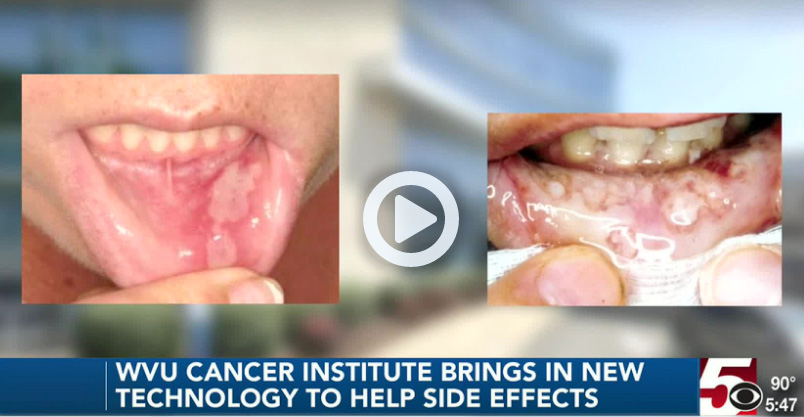
“It is an inflammation type of condition from head and neck radiation,” THOR Photomedicine dental and oral mucositis specialist, Sara Jane Snyder said. “They get painful sores throughout their entire oral cavity, down their esophagus and all they down through their digestive track,” she said.
“Anybody who’s getting a high dose of chemoradiation treatment, it’s almost 100 percent guarantee that their going to get a high level of oral mucositis.”
Having mucositis can make everyday tasks difficult, like eating or brushing your teeth. This is why using what is called Photobiomodulation helps treat this side effect.
“What we found is by shining light of a certain dose and of a certain wavelength, we can actually allow those sores to heal more quickly and reduce pain for patients,” Snyder said.
Recently, The Department of Radiation Oncology at the WVU Cancer institute began using this device.
“One of the reasons that we obtained it is because there are international guidelines for supportive care that recommend this kind of therapy for the prevention and treatment of oral mucositis caused by radiation,” The WVU Cancer Institute Radiation Oncology chair and M.D., Geraldine Jacobson said.
Having this new form of technology is something the institute is hopeful patients will have a better treatment experience.
“We’re really excited because I think it’s going to help our patients get through forms of treatment that are really important to them and they’re just going to feel better during treatment and afterwards,” Jacobson said.
Read article and watch the video at www.wdtv.com
Posted in Industry, PBM/LLLT, Special Feature, THE FUTURE OF PBM/LLLT
on West Virginia University Cancer Institute is using Photobiomodulation for their Oral mucositis patients
Total You Health Finds New Clients During CV-19
 Owner Linda Bailey of Total You Health, winner of the Roanoke Regional Chamber of Commerce’s 2019 Small Business Award, did not let the pandemic stop her from delivering health to the community. In response to social distancing measures, Bailey made the decision to close her doors to human clients and take her healing equipment to the horse barn.
Total You Health has treated four horses for pain and inflammation by using their portable Photobiomodulation therapy unit with much success. Photobiomodulation, also known as “red light” therapy, is traditionally used on people in chronic pain, but this is also seen to relieve symptoms for depression, anxiety and other conditions.
Read the full article on theroanoker.com
Article and video on wsls.com
Register today for our comprehensive training and equip yourself with the tools to heal and relieve pain.
Posted in Animal Videos, Industry, PBM/LLLT, Veterinary, Video of the Week
on Total You Health Finds New Clients During CV-19
LumiThera to Expand Research into Diabetic Retinopathy for Valeda® Light Delivery System
SEATTLE, Feb. 18, 2020 /PRNewswire/ — LumiThera Inc., a commercial stage medical device company delivering Photobiomodulation (PBM) treatment for ocular disorders and diseases, today announced it has initiated further studies with the University of Wisconsin-Milwaukee to establish the use of their Photobiomodulation platform in Diabetic Retinopathy (DR).
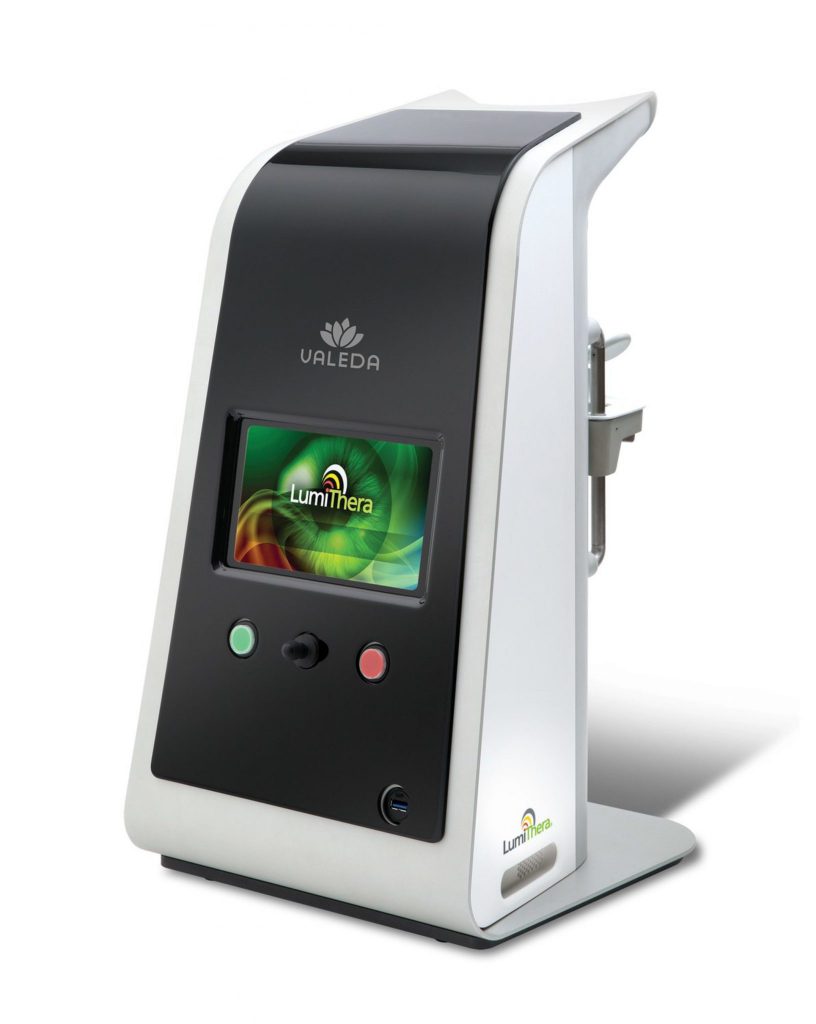
“Recent research in our labs in both preclinical and clinical areas have indicated potential in treating diabetic edema with PBM,” stated Janis Eells, Ph.D., Professor, University of Wisconsin-Milwaukee. “Our work shows that early PBM benefits in reducing the detrimental effects of high glucose on retinal cells and early human data is now starting to show benefits in the clinical setting.”
DR is the leading cause of blindness in the world. The International Diabetes Foundation 2019 Fact Sheet estimated that globally 463 million people have diabetes now, and future estimates suggest that this number will increase to 578 million by the year 2030.
“We have been working with Dr. Eells and the University of Wisconsin-Milwaukee on our dry AMD research and the work in DR and Diabetic Macular Edema (DME) is a logical extension of our PBM platform,” stated Clark E. Tedford, Ph.D., President and CEO of LumiThera, Inc. “The results from Dr. Eell’s lab point to the multiple cellular benefits of treating the disease early and PBM would be an alternative approach for treatment of early disease.”
LumiThera was granted a CE mark to commercialize the Valeda System in European Union for the treatment of ocular diseases including dry AMD. The company previously announced that the National Institutes of Health and division of the National Eye Institute have provided a $2.5M grant to support the LIGHTSITE II multi-center clinical trial to lead to U.S. approval for dry AMD. The Company is enrolling two multi-center trials, one in European Union and one in the US for dry AMD. The entry into DME provides a second major ocular disease platform for the Valeda system.
“We are excited to be involved in the development of Valeda for both non-neovascular (dry) AMD and DME. We are currently enrolling patients in the LIGHTSITE III study and believe that PBM could be an even bigger platform for DME,” remarked Quan Dong Nguyen, M.D., M.Sc. and Diana V. Do, M.D., Professors of Ophthalmology at the Byers Eye Institute, Stanford University. “DME is the leading cause of functional vision loss among working adults worldwide. Treatments with intravitreal injections of pharmacologic agents are effective but can be costly and invasive. PBM could provide a significant improvement to the current practices with its non-invasive approach.”
“I am continually impressed with the scientific foundation that LumiThera is building for PBM with collaborations in both preclinical and clinical research,” stated David Boyer, M.D., Retina-Vitreous Associates Medical Group. “The benefits for PBM on multiple critical cellular pathways involved in the disease etiology in preclinical work is now being evaluated in the clinical setting and could change the way we address chronic disease that leads to blindness.”
About LumiThera Inc.
LumiThera is a commercial-stage medical device company focused on treating people affected by ocular disorders and diseases including dry AMD, a leading cause of blindness in adults over 65 and DR, the leading cause of blindness in the world. The company is a leader in the use of PBM for treatment of acute and chronic ocular diseases and disorders. The company is developing the office-based Valeda Light Delivery System to be used by eye care specialists for medical treatment.
The Valeda Light Delivery System has been granted authorization to use the CE Mark by an EU Notified Body as required for commercial use in the European Economic Area only. Valeda is not approved for use by the Food & Drug Administration (FDA) in the USA.
View the press release on Lumithera website at www.lumithera.com
Disclosure: I am an investor in Lumithera a) because it successfully treats an unmet medical need, (dry AMD) b) I think it will be the first billion dollar photobiomodulation company.
Posted in Industry
on LumiThera to Expand Research into Diabetic Retinopathy for Valeda® Light Delivery System